
The Gascons of Ribadouro: a Thousand Years at Vila Boa do Bispo
A warrior, a bishop, a battle, and a house that has kept their names for a thousand years.
In the parish of Vila Boa do Bispo, in Marco de Canaveses, a whitewashed monastery and its church stand on a slope above the Tâmega. The church is Romanesque in origin and a National Monument; the conventual buildings around the cloister are a Property of Public Interest. Together they hold one of the oldest stories in the north of Portugal: that of a noble family, the Gascos de Ribadouro, whose descendants helped raise the country's first king.
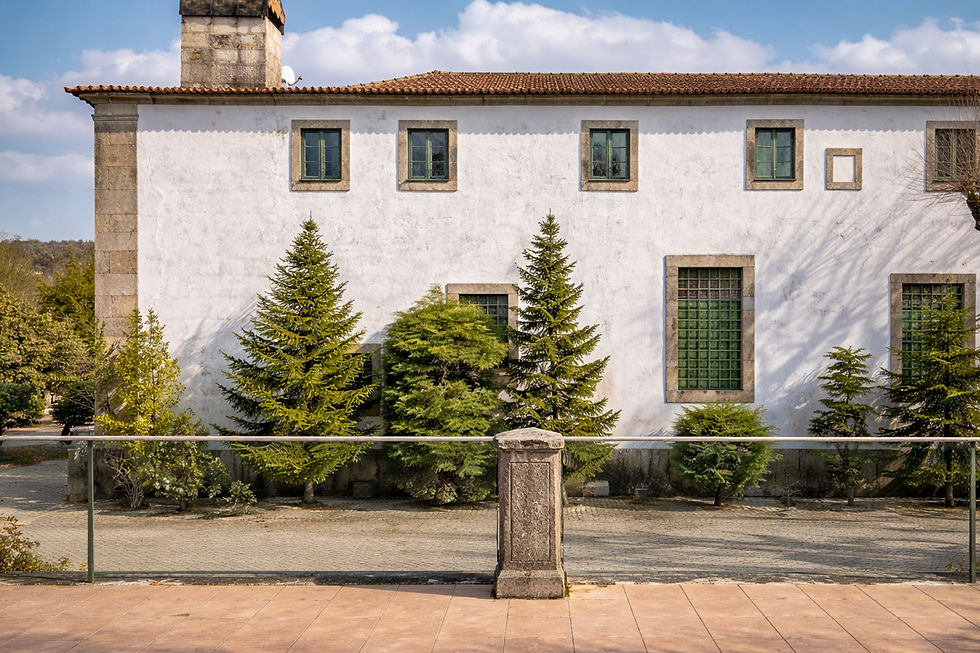
A battle, a warrior and a bishop
Tradition places the foundation between 990 and 1022, on the site of a clash between Christians and Muslims. It credits D. Monio Viegas, known as o Gasco, and his brother D. Sisnando, bishop of Porto. According to the legend, Sisnando was killed by Moors in a hermitage while saying Mass; the monks buried him beneath the altar, and in 1142 Bishop Pedro Rabaldis of Porto had his remains brought to Vila Boa. The first abbot is said to have been a Frenchman, D. Rosardo.
The monastery is first recorded in a document of 1012. In the cloister, a tomb lid carries an inscription naming D. Monio Viegas and two of his sons, dated 1022, although some historians believe the stone may be later.
Gascon by legend, Portuguese by land.
The Gascos de Ribadouro
Old chronicles said that Monio Viegas came from Gascony and landed at the mouth of the Douro in 999 to fight the Moors. Historians now think the family was already rooted in the Ribadouro, the lands along the Douro, and that the epithet may come from a local place name, Gasconha, in present-day Paredes. Either way, his descendants became one of the great noble lineages of the twelfth century.
From that lineage came Egas Moniz, called o Aio, tutor to the young Afonso Henriques, who would become the first king of Portugal. In 1141 Afonso Henriques granted the monastery a carta de couto, a royal charter that made its lands a privileged domain.
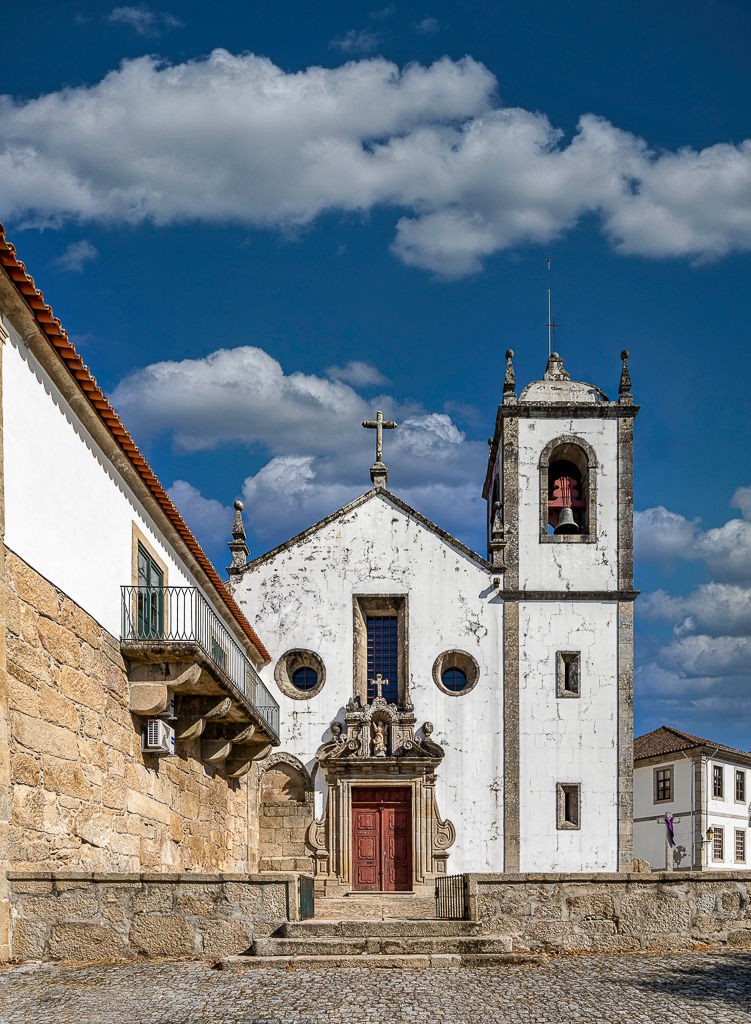
A Romanesque church on the Rota do Românico
The church keeps elements of its Romanesque construction, and inside it a rare series of tombs and inscriptions from the eleventh to the fourteenth centuries, among them those of the prior D. Nicolau Martins, dated 1348, and of D. Júrio Geraldes, a royal magistrate who died in 1381. Since 2010 it has been part of the Rota do Românico, the route of Romanesque monuments of the Tâmega and Sousa valleys.
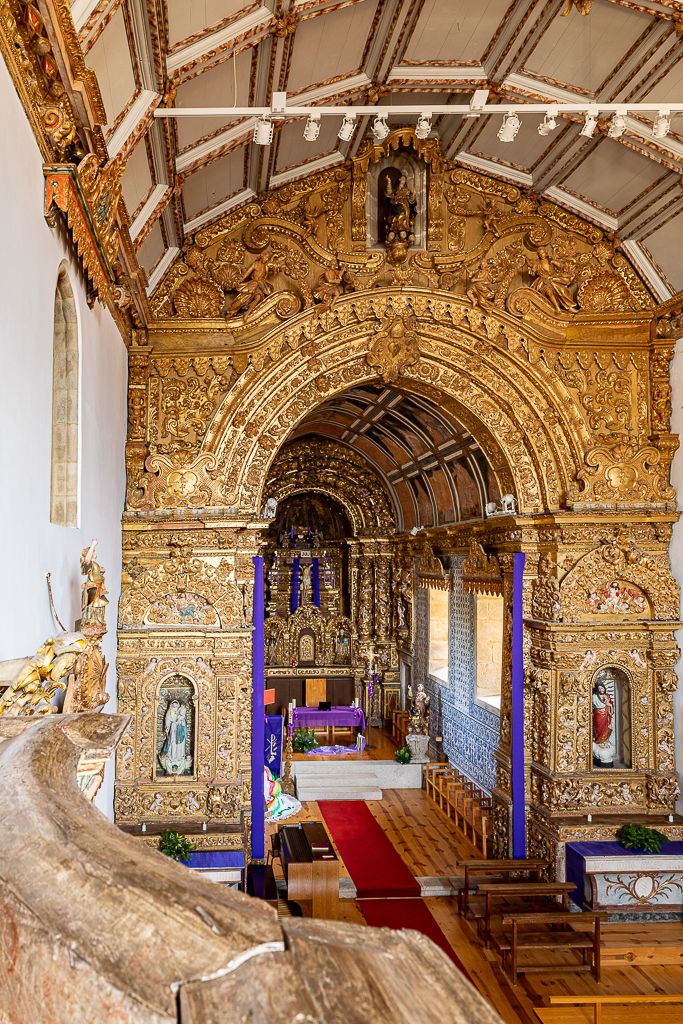
The legend of a battle became a parish, a priory and a family's memory in stone.
The canons who lived here for eight centuries, and the Baroque house they built around the cloister, are the subject of the second part of this story. What happened after 1834, when the canons left, is told in the third.

The house today
The church of Santa Maria remains the parish church and a National Monument, and it is not part of the sale. The former conventual house, with its cloister, gardens and 27 hectares of land above the Tâmega, is for sale through Wiseguys Properties: see the monastery estate near Porto.
Frequently asked questions
Where is the monastery of Vila Boa do Bispo?
In the parish of Vila Boa do Bispo, municipality of Marco de Canaveses, district of Porto, in the north of Portugal, above the river Tâmega.
Who founded it?
Tradition credits D. Monio Viegas, called o Gasco, and his brother D. Sisnando, bishop of Porto, between 990 and 1022. The first documentary record dates from 1012.
What is the link with Afonso Henriques?
Egas Moniz, tutor of Afonso Henriques, came from the Ribadouro lineage descended from the founders, and in 1141 Afonso Henriques granted the monastery a royal charter of privileges.
Is the church classified?
Yes. Since 1977 the church of Santa Maria, with its tombs, has been a National Monument, and the former monastery a Property of Public Interest. The church is part of the Rota do Românico.
Is the church for sale?
No. The church remains the parish church. Only the former conventual house and its land are for sale, through Wiseguys Properties.
Further reading: Listed Buildings in Portugal: Buying a Classified Property.
Sources: Rota do Românico, Monastery of Saint Mary of Vila Boa do Bispo and visitor guide; SIPA, Mosteiro de Santa Maria de Vila Boa do Bispo; Património Cultural, Decreto n.º 129/77; Wikipedia, Moninho Viegas, o Gasco and Egas Moniz, o Aio; Junta de Freguesia de Vila Boa do Bispo. Photographs: Wiseguys Properties.
Comments