
Maumejean: the Stained-Glass Dynasty That Lit Spain, and a Palace in Elvas
In Spain, for most of the twentieth century, coloured light had a surname.
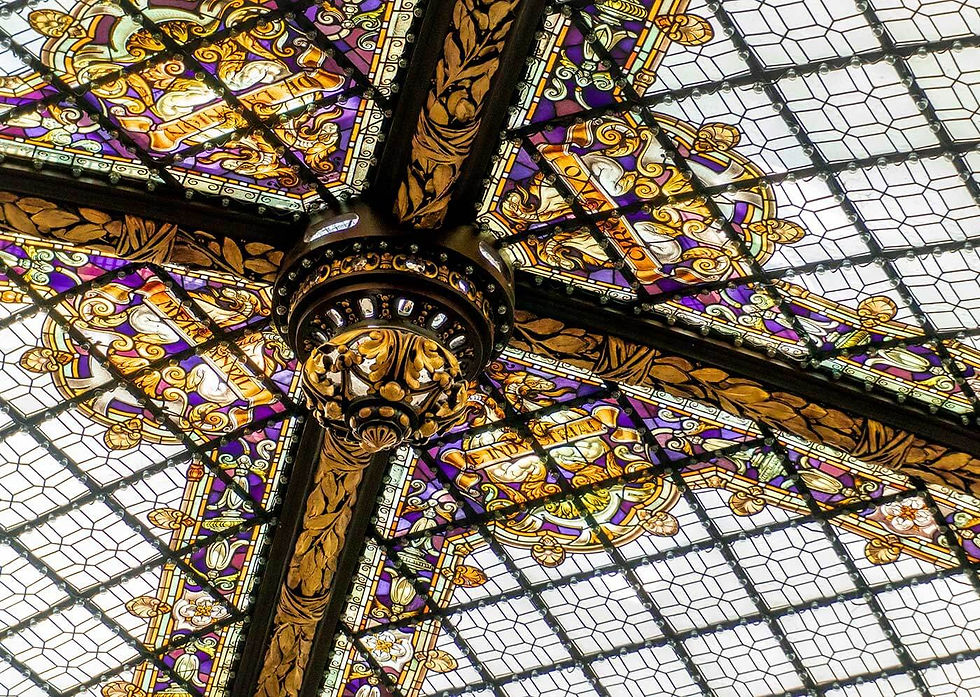
It was Maumejean. A family of glass painters from Pau, in the French Pyrenees, who over three generations became the great stained-glass house of Spain, glazing banks, casinos, palaces and churches from Madrid to Seville. This is the story of Maumejean stained glass, and of the doors and skylight at the Mistress's Palace in Elvas that carry its hand.
Pau, 1860
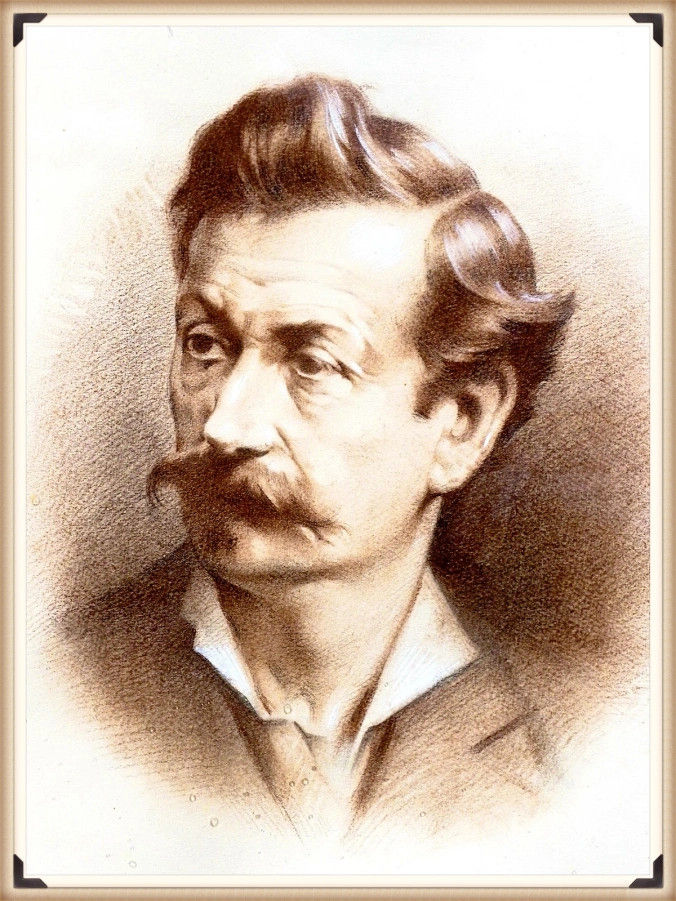
Jules Pierre Maumejean was twenty-three when he opened his first workshop, in 1860, at 14–16 rue Montpensier in Pau, in the house of the Count of Barraute. His first advertisement promised stained glass for churches and oratories. It was an inherited trade of a kind: his father and grandfather had painted faience, and he had trained in Bordeaux and Paris.
He married Marie Honorine Lalanne and they had five children: Joseph, Henri, Léon, Marie and Charles. In 1884 he built a villa in Pau and called it, plainly, Los Vidrieros. The workshop followed the coast: to Anglet in 1890, to Biarritz in 1893. His ties to Madrid brought commissions from the Spanish royal household. He died in 1909.
Madrid, 1898
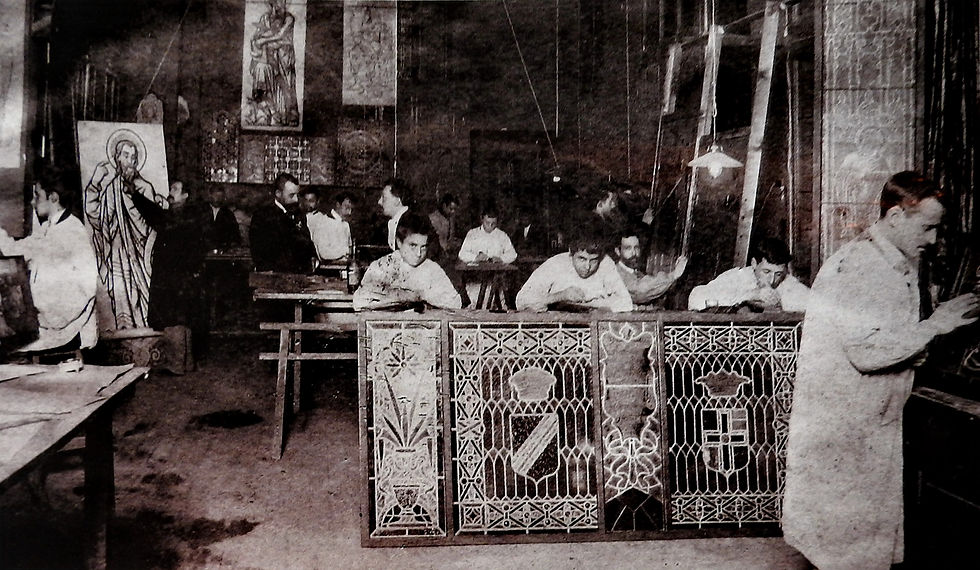
The eldest son, Joseph, known in Spain as José, was born in 1869 and trained with his father, at the École des Beaux-Arts in Paris and in Nancy and Tours, as a pupil of the master glassmaker Jean-Baptiste Anglade. In 1897 he won a medal at Spain's National Exhibition of Fine Arts. In 1898 he opened a workshop in Madrid, at calle Abascal 39, and with his brother Henri he made it the centre of the family business.
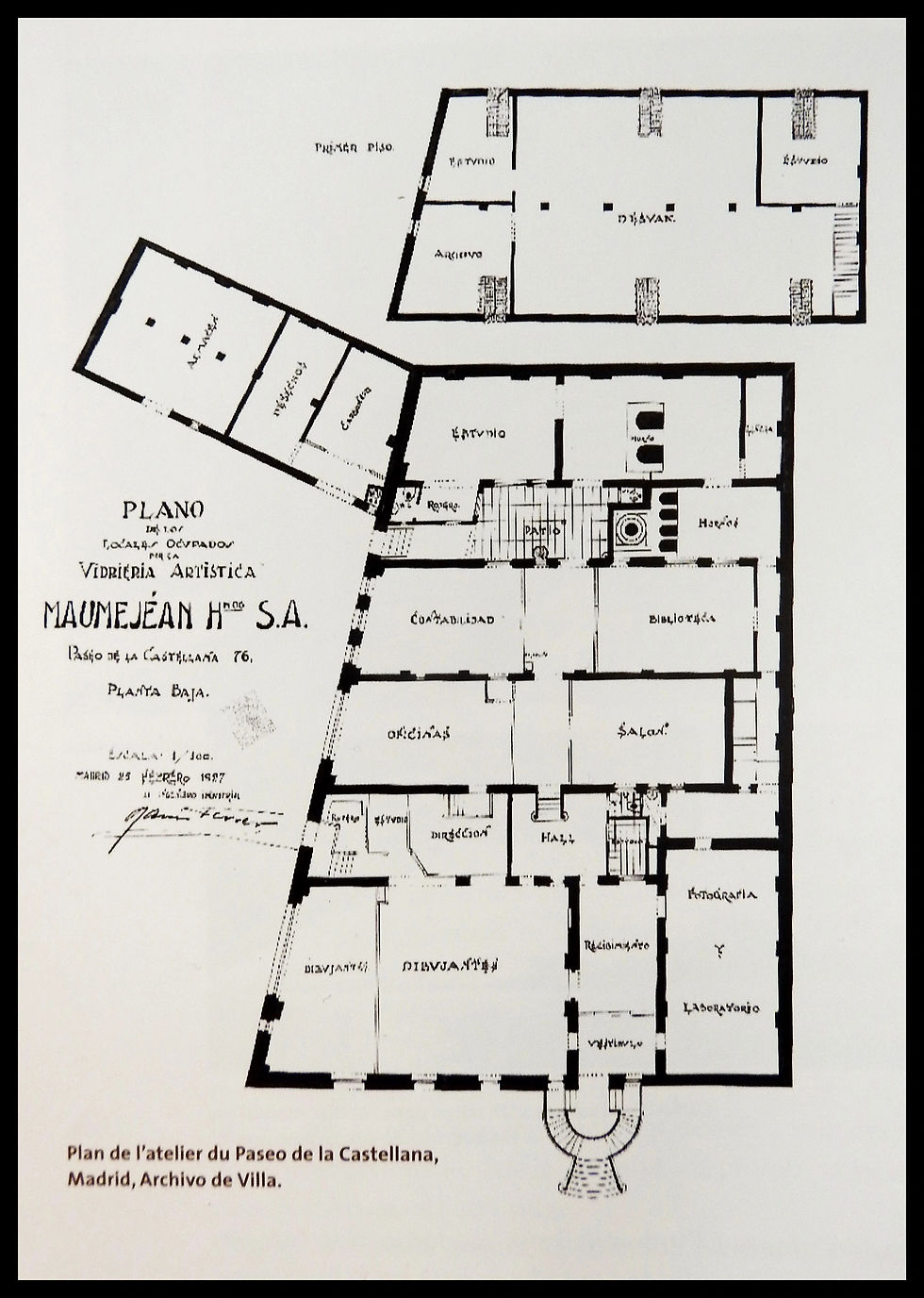
The workshop later moved to the Paseo de la Castellana. A plan drawn up in 1927 shows how a house of light was organised: drawing rooms for the designers, a photographic laboratory, a library, kilns around a patio, an archive upstairs.
Banks, casinos, a city hall
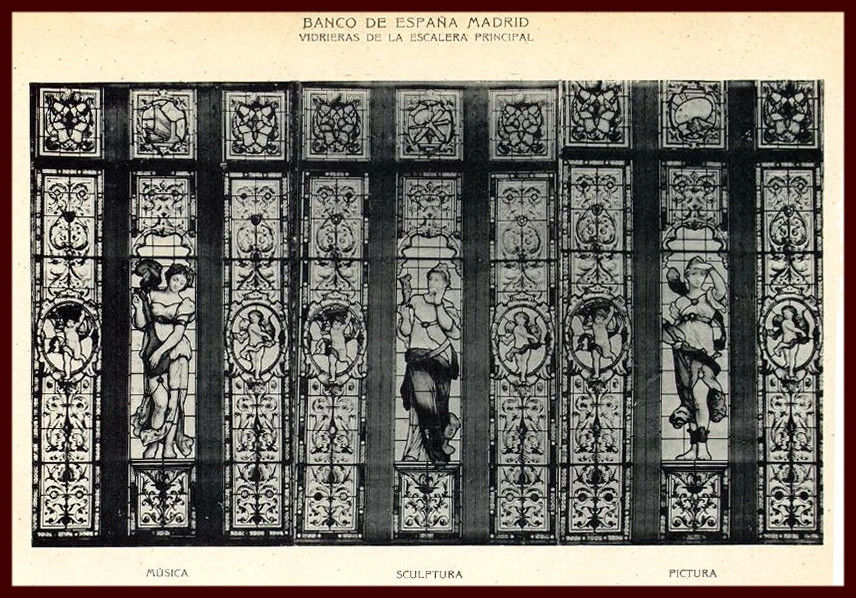
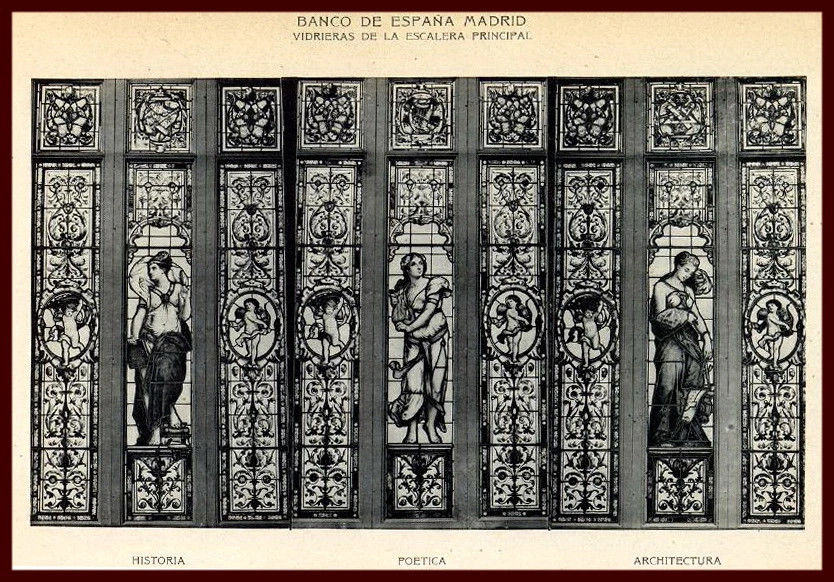
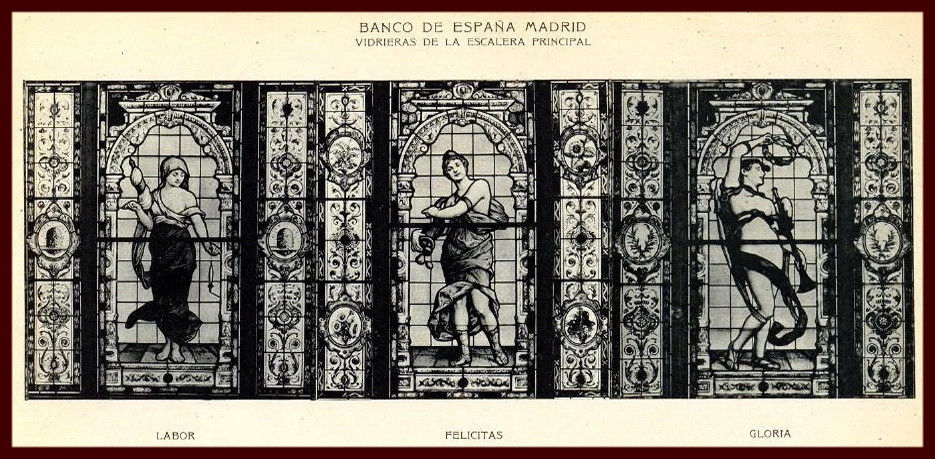
Madrid was rebuilding itself as a capital, and its new institutions wanted light. For the Banco de España, Maumejean glazed the rotunda, the entrance on calle de Alcalá and the main staircase, where allegorical figures stand in tall leaded windows: Music, Sculpture, Painting, History, Poetry, Architecture, Labour, Felicity, Glory. The Patio de Cristales of the Casa de la Villa carries the signature "S.A. Maumejean / Madrid". On the Gran Vía, the firm made the glass that crowns the atrium of the casino inaugurated in 1924 in the presence of Alfonso XIII.
“To say Maumejean, in Spain, was simply to say stained glass.”
A house of many cities
The brothers divided the map. Charles ran the Paris workshop at 6 and 6 bis rue Bézout, in the fourteenth arrondissement, which became known for its mosaics; the main manufacture was at Hendaye, on the border. Branches followed in Barcelona and San Sebastián, the latter also devoted to mosaic. Léon went his own way in Paris, where he died in 1921. The Spanish workshops were grouped as S.A. Maumejean Hermanos, based in Madrid, chaired by the architect José Yarnoz, with the sculptor Mariano Benlliure on its board.
The firm showed at the Paris exhibition of decorative arts in 1925, at Barcelona and Seville in 1929 and at the Colonial Exhibition in Paris in 1931, and collected gold medals in Philadelphia, Milan, Madrid and Pamplona. The work covered every register of the period: historicist and neo-Renaissance, Art Nouveau, Art Deco, rationalist; for churches, banks, theatres and private houses.
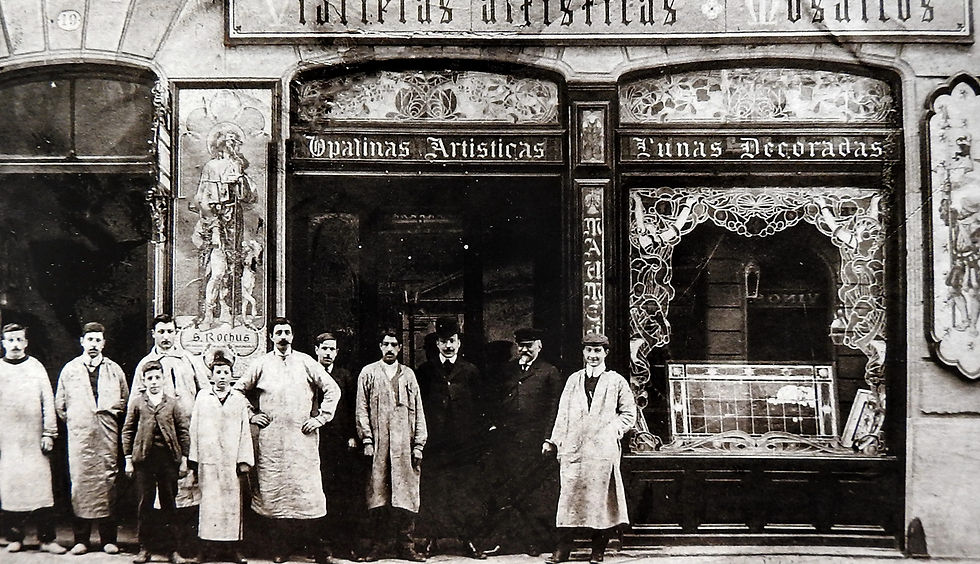
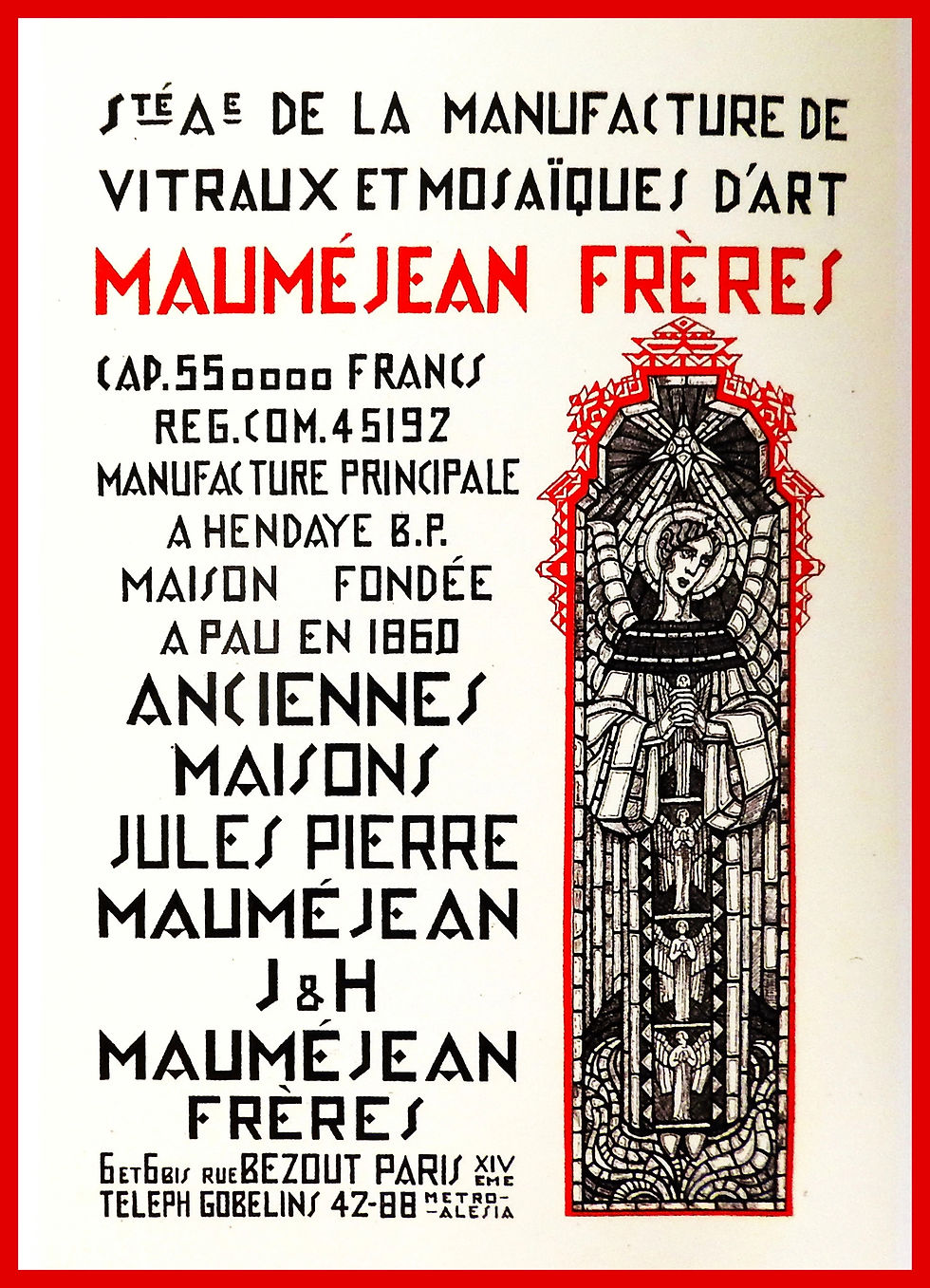
Henri died in 1932. José ran the Madrid workshop into the 1940s, and in old age travelled to Morocco intending to open one more; he died in 1952. Charles followed in 1957, and Joseph's son Georges, the last of the painters, in 1970. The name survives in the Sociedad Maumejean de Vidrieras Artísticas, in Alcalá de Henares, which still makes and restores stained glass.
Maumejean at the Mistress's Palace, Elvas
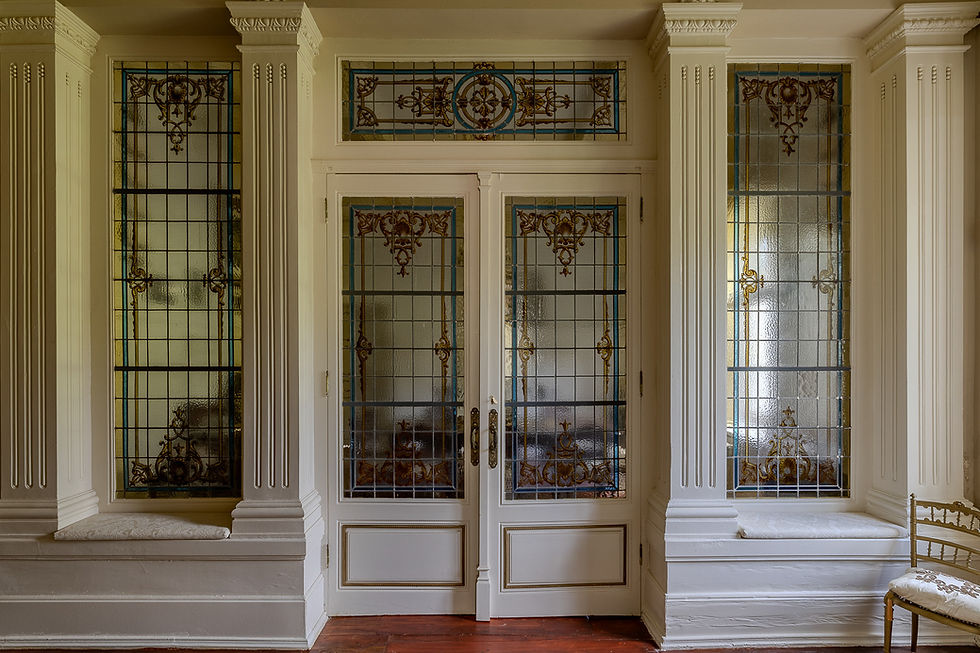
Some of this light crossed the border. At the Mistress's Palace in Elvas, in the Alto Alentejo, the dining room opens through a pair of glazed doors set between fluted pilasters, with a transom above and tall lights on either side. The glass is mostly colourless and textured, framed by coloured borders, and painted with grisaille and silver yellow in fired enamel: classical scrolls and shells with a clear Art Nouveau accent, the kind of mixed register the Madrid workshop did best.
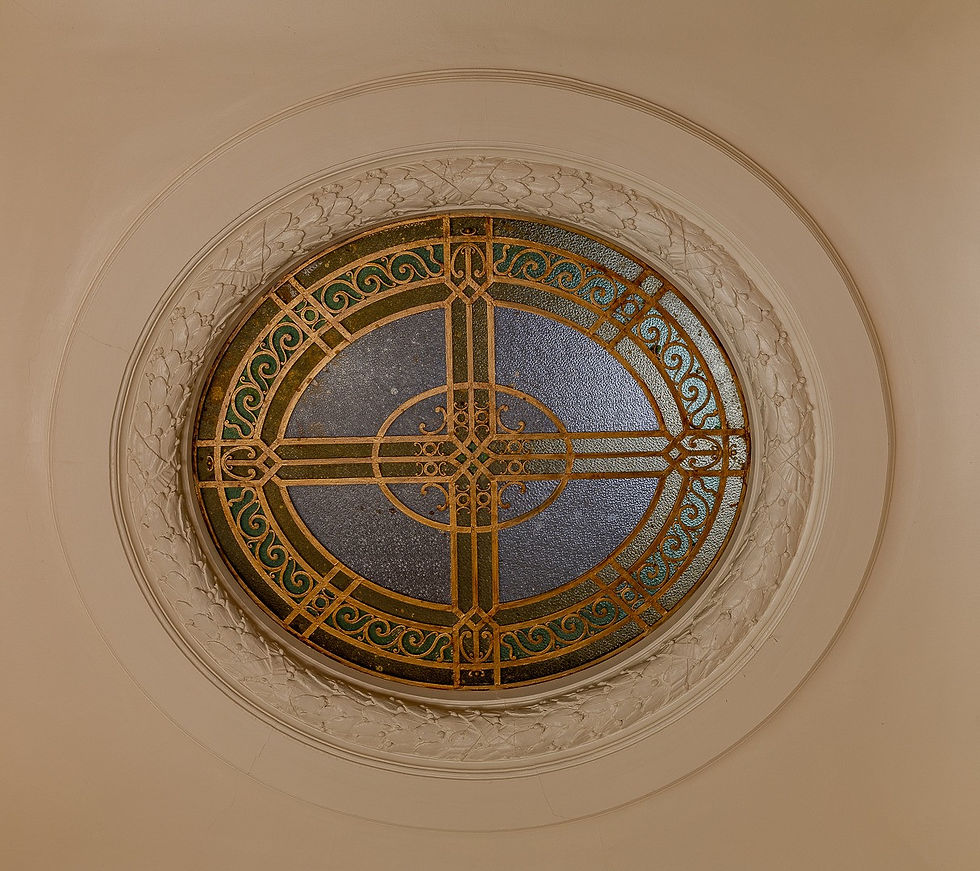
Overhead, an oval skylight is set into the vault inside a moulded laurel wreath: a colourless ground, a central geometric motif, a border of simple plant scrolls in yellow and green. Neither piece is signed. Their technique and design, and their kinship with the house's other glass, point to the Maumejean workshops. The palace is for sale through Wiseguys Properties: see the Mistress's Palace. Its gardens have their own story, told in our piece on Jean-Claude Nicolas Forestier.
Frequently asked questions
Who were the Maumejean?
A French family of stained-glass makers. Jules Pierre Maumejean opened his first workshop in Pau in 1860; his sons, led by Joseph (José) Maumejean, built the business into the leading stained-glass house of twentieth-century Spain, with workshops in Madrid, Paris, Hendaye, Barcelona and San Sebastián.
Where can you see Maumejean stained glass in Madrid?
Among the best-known examples are the stained glass of the Banco de España, including the main staircase, the Patio de Cristales of the Casa de la Villa, and the glass crowning the atrium of the Casino Gran Vía, made between 1917 and 1924.
Is the Maumejean company still active?
Yes. The firm continues today as the Sociedad Maumejean de Vidrieras Artísticas in Alcalá de Henares, near Madrid, working on new commissions, restoration and conservation.
How can you recognise Maumejean stained glass?
Some pieces are signed, for example "S.A. Maumejean / Madrid". Many are not, and attribution then rests on archives, documented commissions and comparison of technique: leaded glass combining textured colourless glass with coloured borders, painted grisaille, silver yellow and fired enamels.
Further reading: Listed Buildings in Portugal: Buying a Classified Property.
The Mistress's Palace in Elvas is represented by Wiseguys Properties. For a private viewing, or for other houses of this calibre, many of them away from the open market, see our off-market properties or write to us.
Sources: Casa Decor; Casino Gran Vía; Archivo de Villa, Madrid (workshop plan, 1927); studies on S.A. Maumejean Hermanos. Archive images: Maumejean family and Banco de España plates. Photography of the Mistress's Palace: Wiseguys Properties. Wiseguys Properties, AMI 23109 · info@wgpadvisors.com
Comments