
Villa Justa: the Palace a Badajoz Banker Built in Elvas, Portugal
Updated: 1 day ago
Some houses are built for a family. Villa Justa was built for a fortune.
On the edge of Elvas, a few kilometres from the Spanish border, a banker from Badajoz built himself a country palace in 1888. Over the next half-century it passed to a Spanish republican, sheltered his widow, gave the town a name to whisper and acquired a legend involving a king. This is the history of Villa Justa, known today as the Mistress's Palace.

Three orchards and an olive grove, 1888
On 11 January 1888, Luis Olleros y Mancilla, resident in Badajoz, bought from Joaquim Guilherme de Vasconcelos Azevedo e Silva, of the Rua de Olivença in Elvas, and his wife, Catarina Amália de Vasconcelos de Azevedo e Silva, three plots on the edge of the town: the Horta do Álamo, the Horta dos Passarinhos and the Olival dos Álamos. He paid 2,600,000 réis. The deeds describe a landscape of neighbours: olive groves on every side, each with its owner's name.
A lawyer from Béjar
Olleros was born in Béjar, in the province of Salamanca, on 17 March 1836. He took his first degree in philosophy at the University of Salamanca in 1851, read law in Madrid and began practising on 12 August 1861. He settled in Badajoz and, over the following decades, enlarged an already substantial family fortune until he became the best-known banker in the city.

A palace at the edge of Elvas
In 1887 he decided to build a large country palace on the outskirts of Elvas and to call it Villa Justa. Work began in March 1888. As the first trenches were dug for the foundations, near the Ribeira de Gil Navalha, the builders came upon a Roman necropolis; its pieces were collected by the municipality.
It was no accident. The fertile plain around Elvas was farmed by Roman villas for centuries; at Quinta das Longas, a few kilometres away, excavations begun in 1990 uncovered a late-imperial villa and, in 2000, a group of marble sculptures from its nymphaeum. Two thousand years before Villa Justa, someone else had chosen this ground for a house.


The republican from Madrid
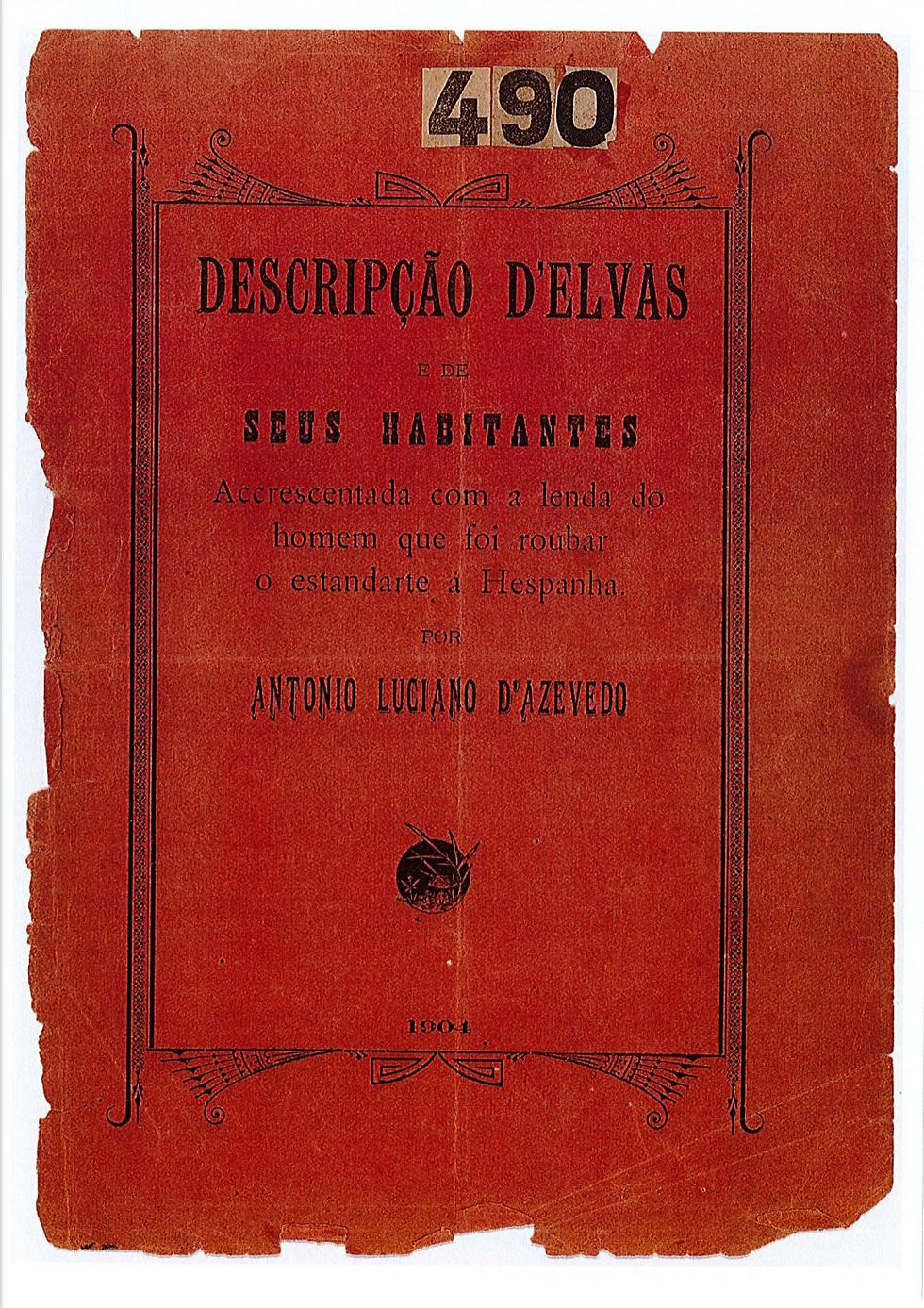
Olleros died at the end of the 1890s, and Villa Justa passed to another Spaniard, Luis Arenzana Barrera, who was living there by 1904: the house and its owner appear that year in António Luciano d'Azevedo's Descripção d'Elvas e de seus habitantes. Arenzana was a republican close to Spain's Radical Party, and a house across the border suited a man of his opinions, all the more after Portugal itself became a republic in 1910.
In the 1920s and 1930s he spent far more time in Madrid than in Elvas, leaving his wife alone in the palace. After the Civil War his name appears in the Causa General, the archive of Franco's regime, in a file for "disaffection to the regime".
Quinta da Espanhola
When Arenzana died, Villa Justa went to his widow. She lived on in the palace by herself, and Elvas began to call it the Quinta da Espanhola, the Spanish woman's house. Alone, she entertained: the upper bourgeoisie of the region, members of the Spanish nobility. And the town talked.
The story that survives is that Alfonso XIII was a regular guest, and her lover. It cannot be proved. The historian José Luis Hernández Garvi, who catalogued the king's many affairs, does not name her, while noting that there were surely more than anyone has documented. What remains is a legend, a nickname and, in time, the name the house still carries.
“A legend cannot be proved. It can only be kept, and Elvas kept this one.”
The house today
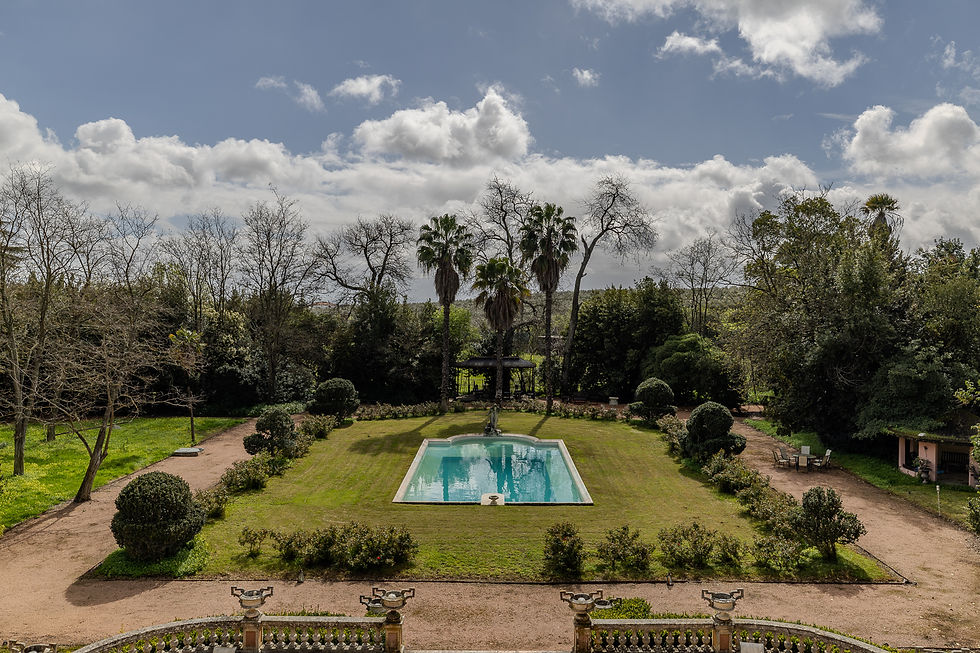
The Mistress's Palace stands on nine hectares, with gardens attributed to Jean-Claude Nicolas Forestier and stained glass attributed to the Maumejean workshops. It is for sale through Wiseguys Properties: see the Mistress's Palace in Elvas.
Frequently asked questions
What is Villa Justa in Elvas?
Villa Justa is a country palace on the outskirts of Elvas, in Portugal's Alto Alentejo, begun in 1888 for Luis Olleros y Mancilla, a lawyer and banker from Badajoz. It is known today as the Mistress's Palace.
Why is it called the Mistress's Palace?
After the death of its second owner, Luis Arenzana Barrera, his widow lived on alone in the house, which became known locally as the Quinta da Espanhola. A local legend made her a lover of King Alfonso XIII. No document confirms it, but the story gave the house its name.
Was there a Roman villa on the site?
When the foundations were dug in 1888, a Roman necropolis was found near the Ribeira de Gil Navalha, and its pieces went to the municipality of Elvas. The countryside around Elvas was densely farmed in Roman times, as the excavated villa of Quinta das Longas shows.
Is the Mistress's Palace for sale?
Yes. The palace, its gardens and nine hectares of land are for sale through Wiseguys Properties.
Further reading: Listed Buildings in Portugal: Buying a Classified Property.
For a private viewing of the Mistress's Palace, or for other houses with a history of their own, many of them away from the open market, see our off-market properties or write to us.
Sources: deed of purchase of 11 January 1888 and property records; António Luciano d'Azevedo, Descripção d'Elvas e de seus habitantes (1904); Causa General, Archivo Histórico Nacional; studies on the Roman villa of Quinta das Longas. Photography of the palace: Wiseguys Properties. Wiseguys Properties, AMI 23109 · info@wgpadvisors.com
Comments