
The Village That Emptied: Azinheira, near Castelo Branco
Updated: 1 day ago
There is no one left in Azinheira. The houses are still there.
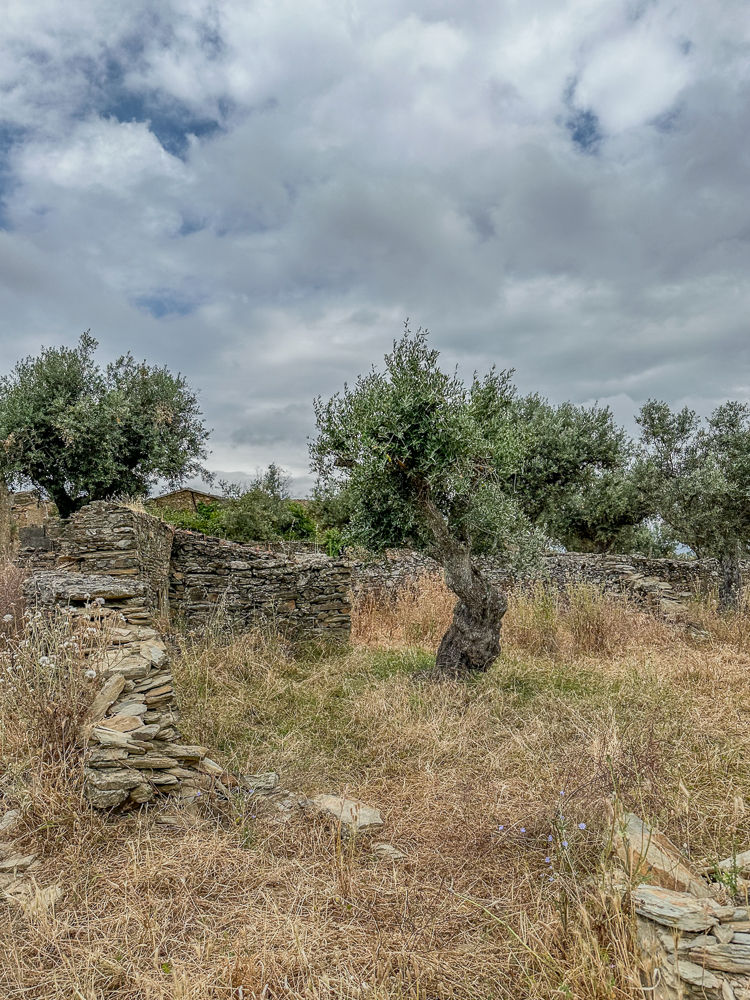
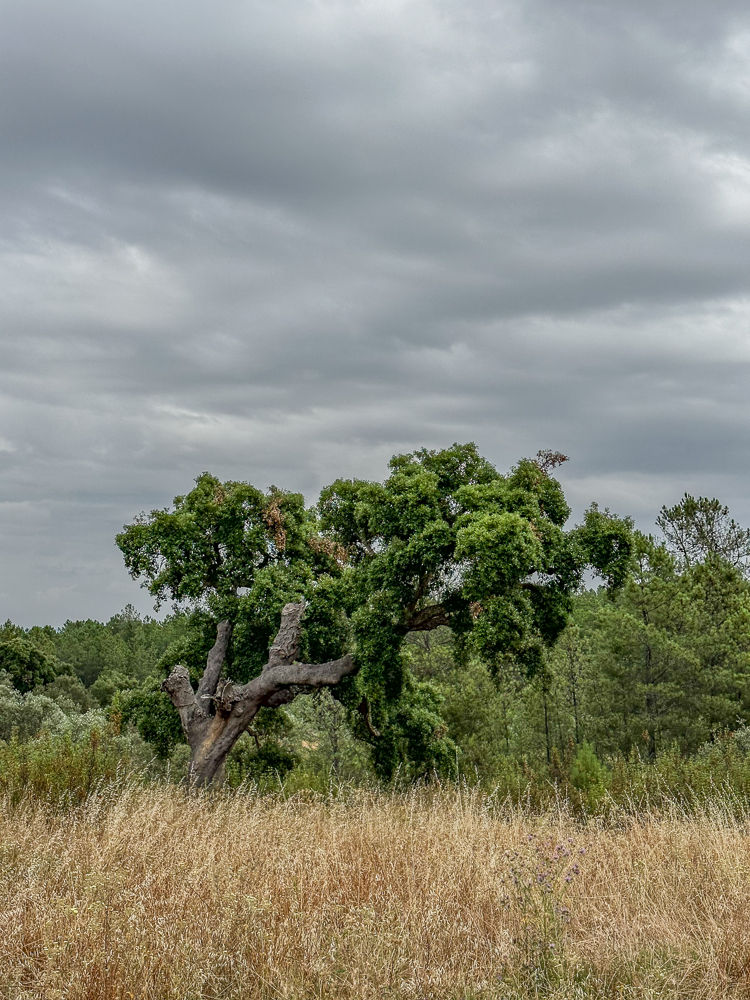
Less than ten kilometres south-west of Castelo Branco, Portugal, in the parish of Benquerenças, a handful of stone houses line two paths that cross. Around them grow pines, olive trees and holm oaks, the azinheiras that gave the place its name. Nobody lives here any more. Since 2004, the village has been protected as a site of municipal interest.

A house made from the ground
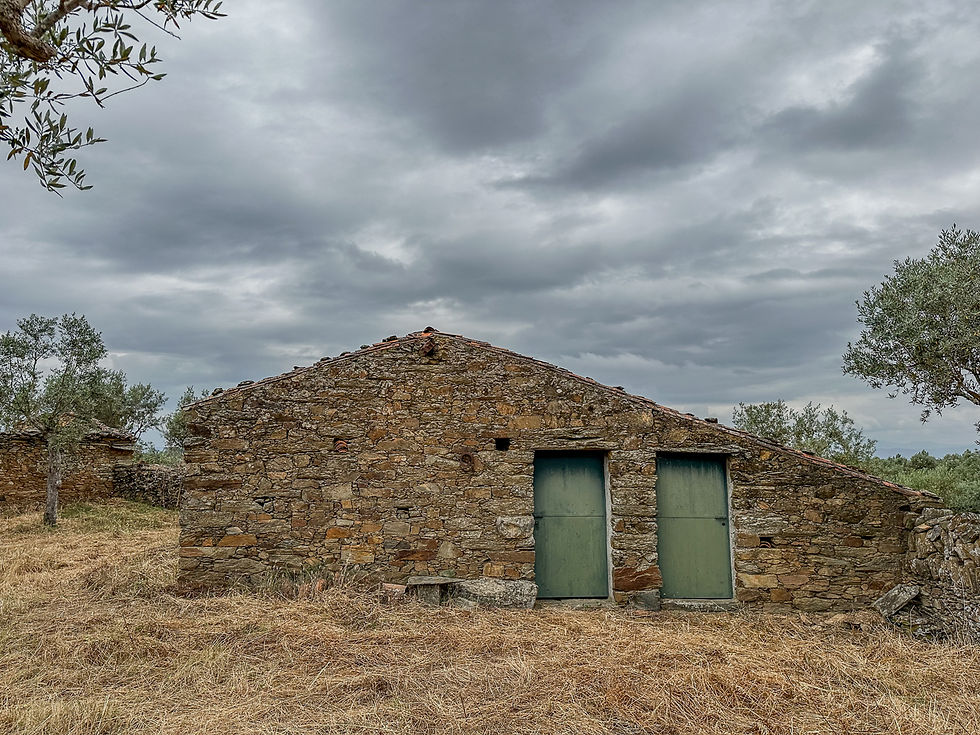
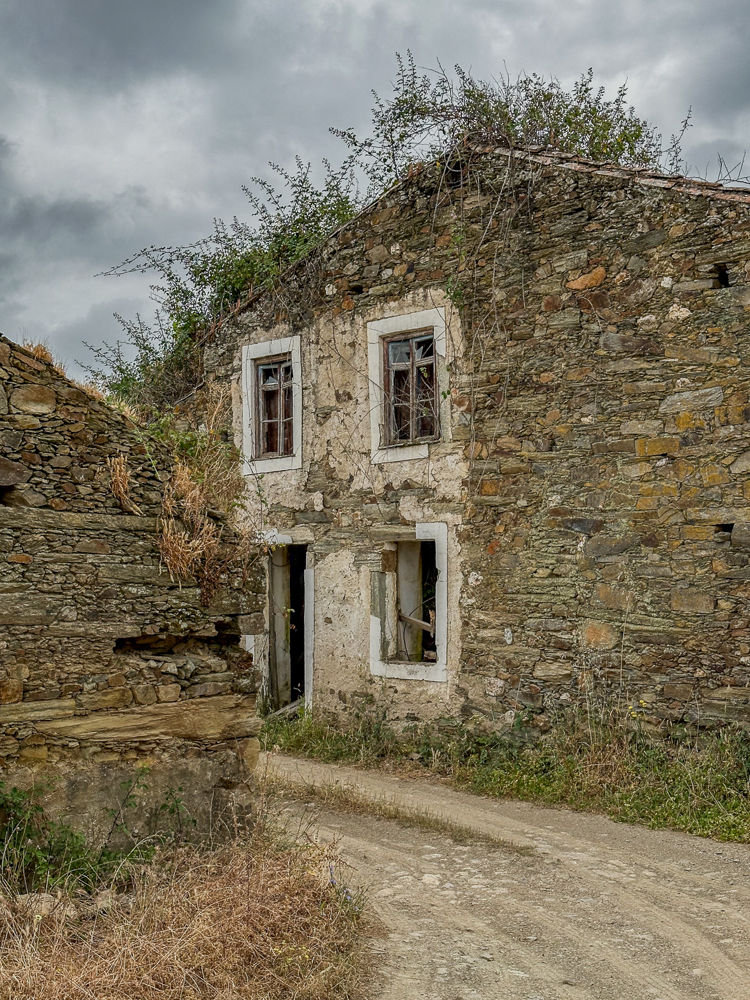
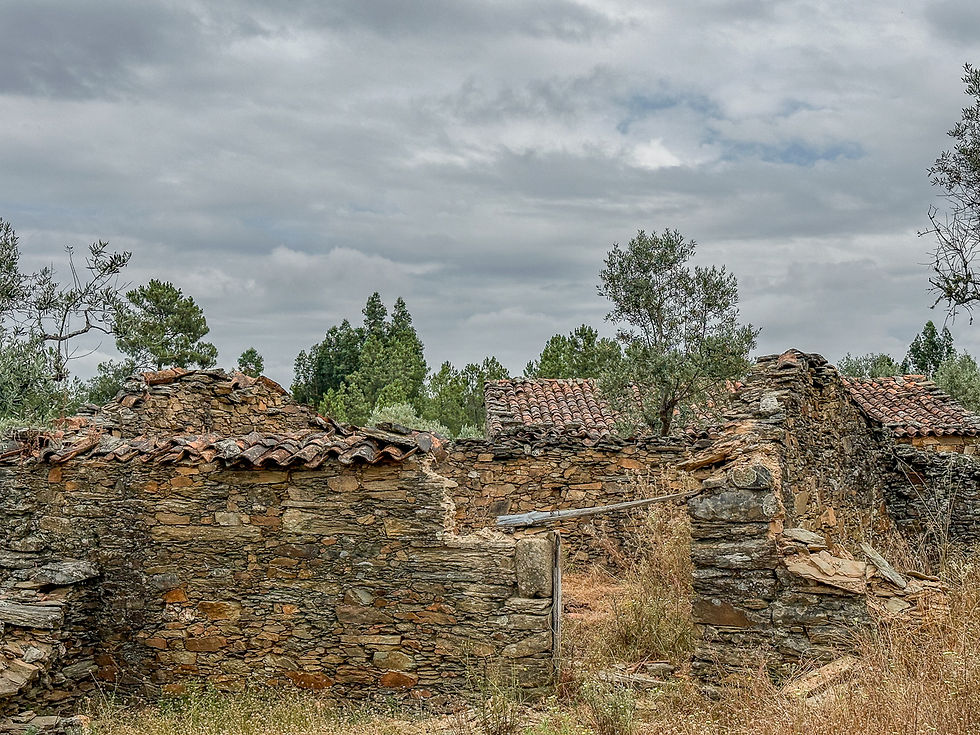
Everything here came from the land around it. The walls are of schist, or of rolled river pebbles laid between horizontal courses of schist, bound with the local red clay. Larger blocks of schist form the corners, the lintels and the jambs; slabs of schist set on edge make the low parapets. The roofs were of curved clay tiles, of schist slabs, or of thatch.
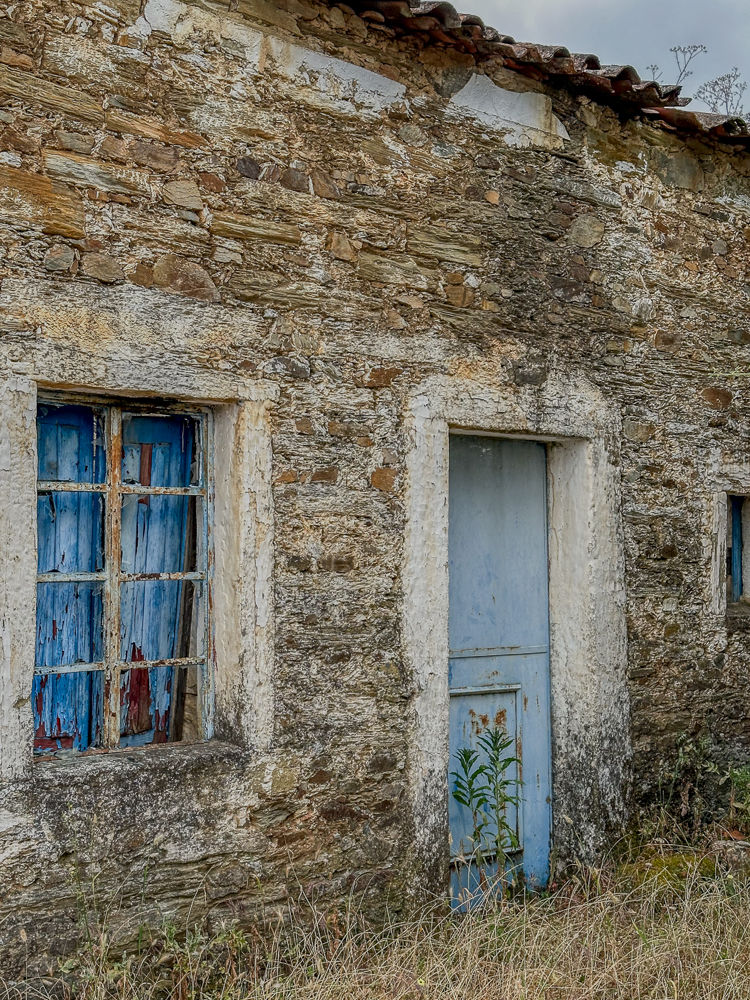
The houses have one or two floors and adapt to their plots, to the slope and to the quality of the soil. A façade usually has one door and one or more windows, with lime render and a painted band around the openings. Some houses were later rendered all over, to keep out the cold.
A fire on the floor, and no chimney.
Life around the hearth
Inside, the rooms were dim. In the main room the fire was laid directly on the floor, and the food was cooked there. Many houses had no chimney, so the smoke found its own way out and the walls turned black. The sleeping alcoves were small, and often shared by several people. Outside, the common paths, a few yards and small threshing floors stayed open to everyone. A well, a fountain and an oven still stand.
How the Beira Baixa emptied
The parish of Benquerenças had 1,463 inhabitants in 1864 and reached its peak in 1940, with 1,993. Then the interior began to empty. Between 1960 and 1970 the parish lost almost a third of its people; it fell again at the turn of the century. In 2021 it had 637. Azinheira, one of its villages, is now completely uninhabited.
The houses stayed. The people left.
A republic for one afternoon
Empty is not the same as forgotten. On 22 June 2024, the art project Estado Ativo, run by the association Terceira Pessoa with support from the Directorate-General for the Arts and the commission for the fiftieth anniversary of 25 April, ended in Azinheira. Under the question “How will we live together?”, poems, songs, performances and paintings celebrated the village, as a fiction, as an independent utopian state.
The estate
The estate now offered for sale through Wiseguys Properties brings together houses, annexes and land in Azinheira across several plots: 557 m² of buildings and 7,056 m² of land. Because the village is classified, any restoration depends on the approval of the municipality of Castelo Branco. See its page, and read our guide to buying a village in Portugal.
Frequently asked questions
Where is Azinheira?
In the parish of Benquerenças, municipality of Castelo Branco, in the Beira Baixa, less than ten kilometres south-west of the city.
Is the village protected?
Yes. It was classified as a property of municipal interest by the municipality of Castelo Branco in 2004 (Edital no. 94-A/2004).
What are the houses built of?
Schist and rolled river pebbles bound with local red clay, with roofs of curved clay tiles, schist slabs or thatch.
Does anyone live in Azinheira?
No. The village is completely uninhabited.
Is it for sale?
An estate of houses, annexes and land in Azinheira is for sale through Wiseguys Properties.
Further reading: Renovating a House in Portugal: Old Walls, New Rules, and Listed Buildings in Portugal: Buying a Classified Property.
Sources: Património Cultural (DGPC), Aldeia da Azinheira (Maria Ramalho, 2017, with João Santos, Câmara Municipal de Castelo Branco); José Antunes Belo, Benquerenças (1985); INE census data via Wikipedia; Comissão Comemorativa 50 Anos 25 de Abril and Rádio Castelo Branco (2024). Photographs: Wiseguys Properties.

Comments