
The House Where Nisa Embroiders
A quiet street, an iron gate, and a craft that is learned by hand.
In Nisa, a small town in Portugal's Alto Alentejo, a two-storey house stands behind a low stone wall and an iron gate on Rua Dr. Manuel Arriaga. By the gate hangs a modest sign: Grupo de Alinhavados de Nisa. This is the seat of a group of local women who keep alive the embroidery their town is known for, in a house whose stucco ceilings and patterned floors have something of the needle about them.

A town of needle and clay
Nisa has deep roots. In 1199 King Sancho I granted the lands of the Açafa to the Knights Templar, who built a fortress here. The town received its first charter between 1229 and 1232, and a new one from King Manuel I in 1512. Its name may come from settlers from Nice, in France. Two medieval gates, the Porta da Vila and the Porta de Montalvão, still stand, and a sixteenth-century Manueline pillory marks the old centre, a short walk from the house.
The town is better known, though, for what its hands make: Nisa cheese, the pedrada pottery of red clay inlaid with small white stones, and embroidery in several techniques, from felt appliqué to the openwork known as alinhavado. The Museu do Bordado e do Barro, the museum of embroidery and clay, is devoted to both crafts.
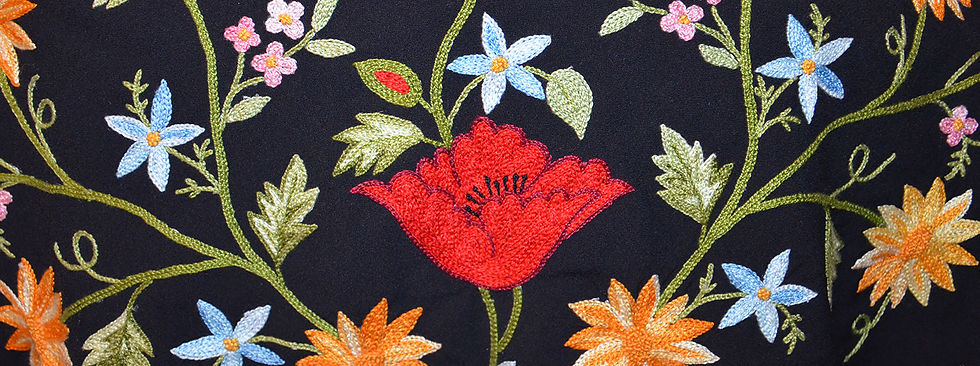
Threads are drawn out so that the pattern can come in.
What is an alinhavado?
The alinhavado, also called desfiado or ramo de pano, is worked on linen or cotton. Threads are pulled from the fabric to open a grid, the pattern is built in the spaces, and its outline is reinforced with a corded stitch. The oldest form, the caramelo, fills small squares with geometric motifs without drawing out any thread at all. No one can say exactly when the technique took root in Nisa.
For generations it travelled through the trousseau. Until the middle of the twentieth century, girls in Nisa learned embroidery from local mistresses once they had left school, and sheets, tablecloths and shawls were prepared for marriage stitch by stitch. As schooling grew longer and daily life changed, fewer girls learned, and some techniques were lost.
The women of number 4
The Grupo de Alinhavados de Nisa began more than three decades ago, when a group of friends who had followed a training course decided to keep embroidering together. In 2016 it was run almost without profit by retired women, who regretted how few young people wanted to learn. The group has won prizes in contests, its work is shown at the Museu do Bordado e do Barro, and its pieces are sold at its seat, number 4 Rua Dr. Manuel Arriaga.
Some pieces take so long to make that no one can quite put a price on them.
From Nisa to Versailles
In 2009 the artist Joana Vasconcelos made Valquíria Enxoval, the Valkyrie Trousseau, in collaboration with the artisans of Nisa: a suspended sculpture fourteen metres long, clothed in the town's embroidery, felt appliqué, bobbin lace and pottery. In 2012 it travelled to the Palace of Versailles for her exhibition there. The work belongs to the municipality of Nisa and has been on permanent display in the town's Cine-Teatro since 2016.
The trousseau, once embroidered at home for a wedding, had become a work of art.
The house
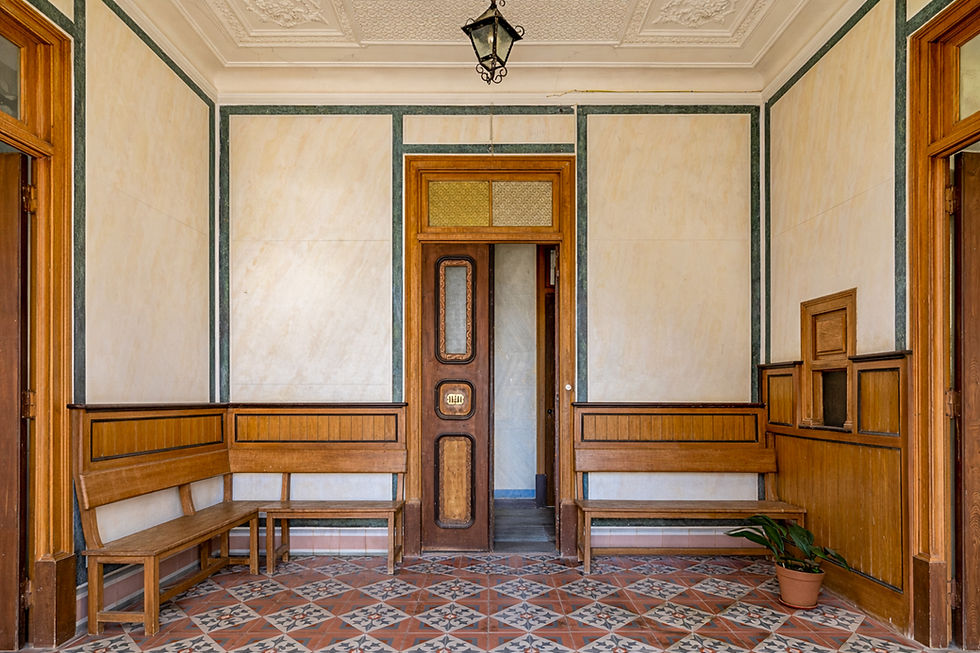
The house belongs to the tradition of the Alentejo town mansion: a symmetrical façade of two storeys, windows framed in stone, a wrought-iron balcony and a fanlight over the door. Inside, the entrance hall is lined with wooden panelling and built-in benches, over a floor of patterned cement tiles.
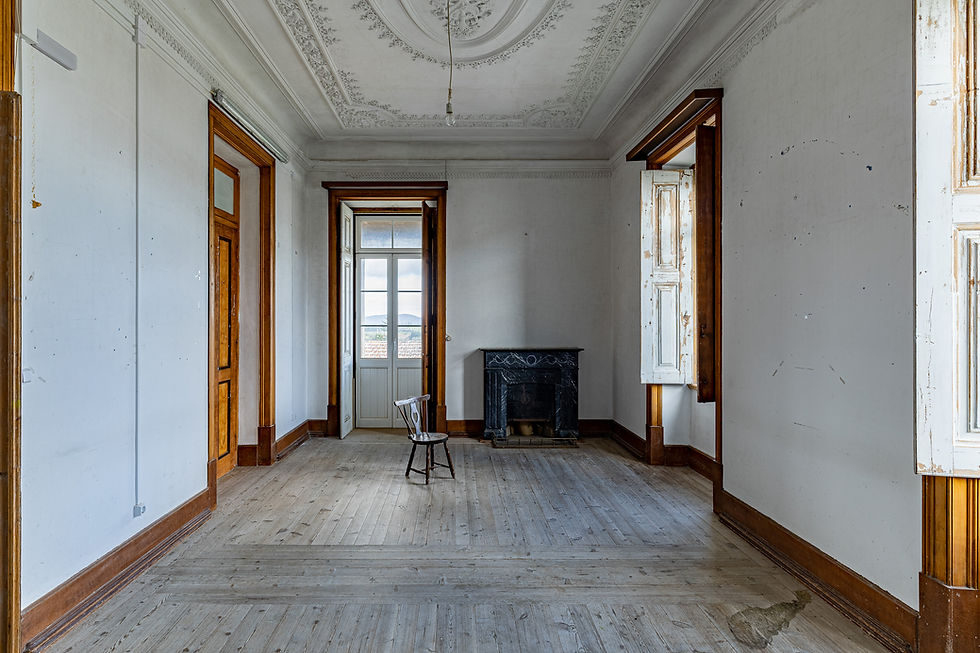
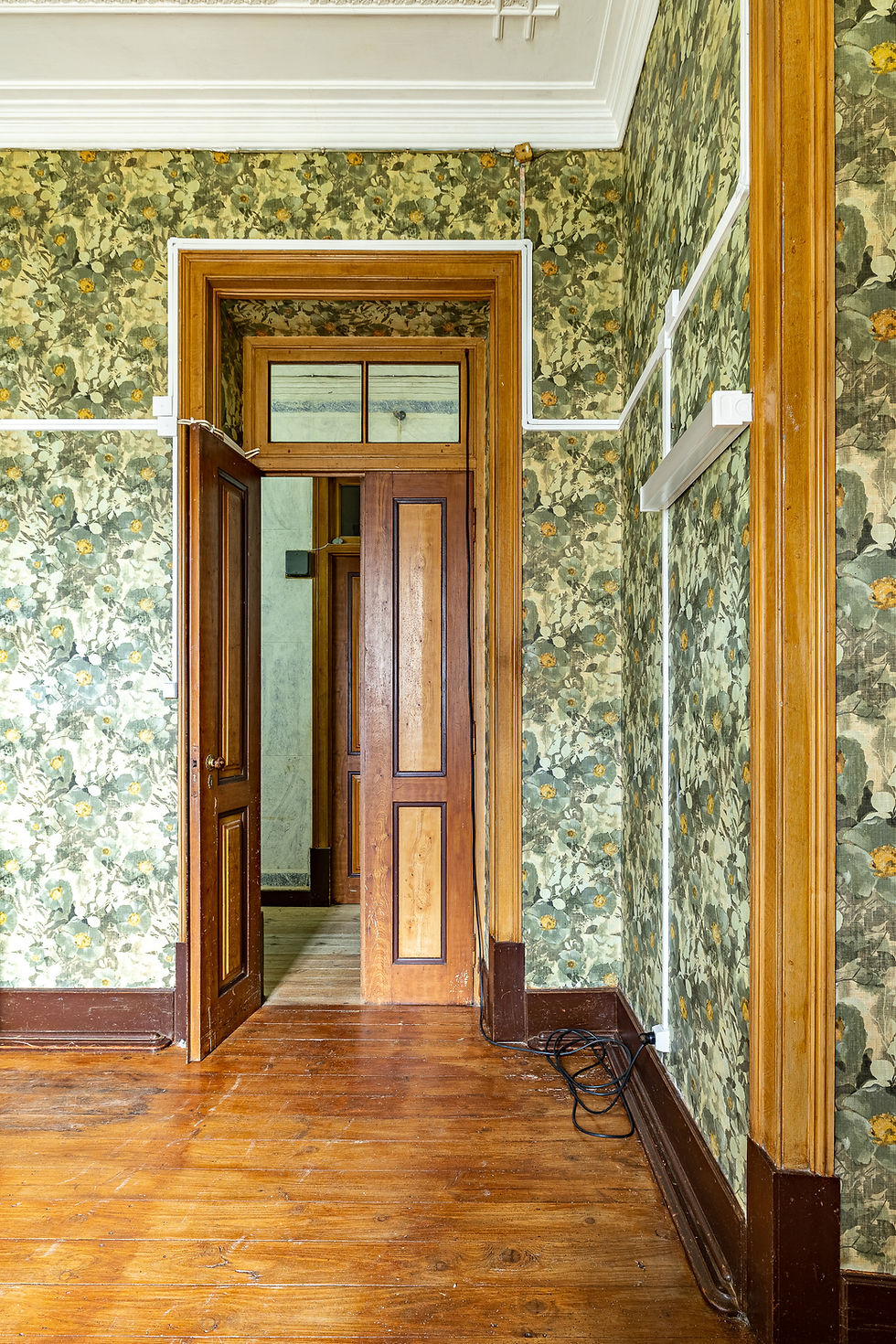
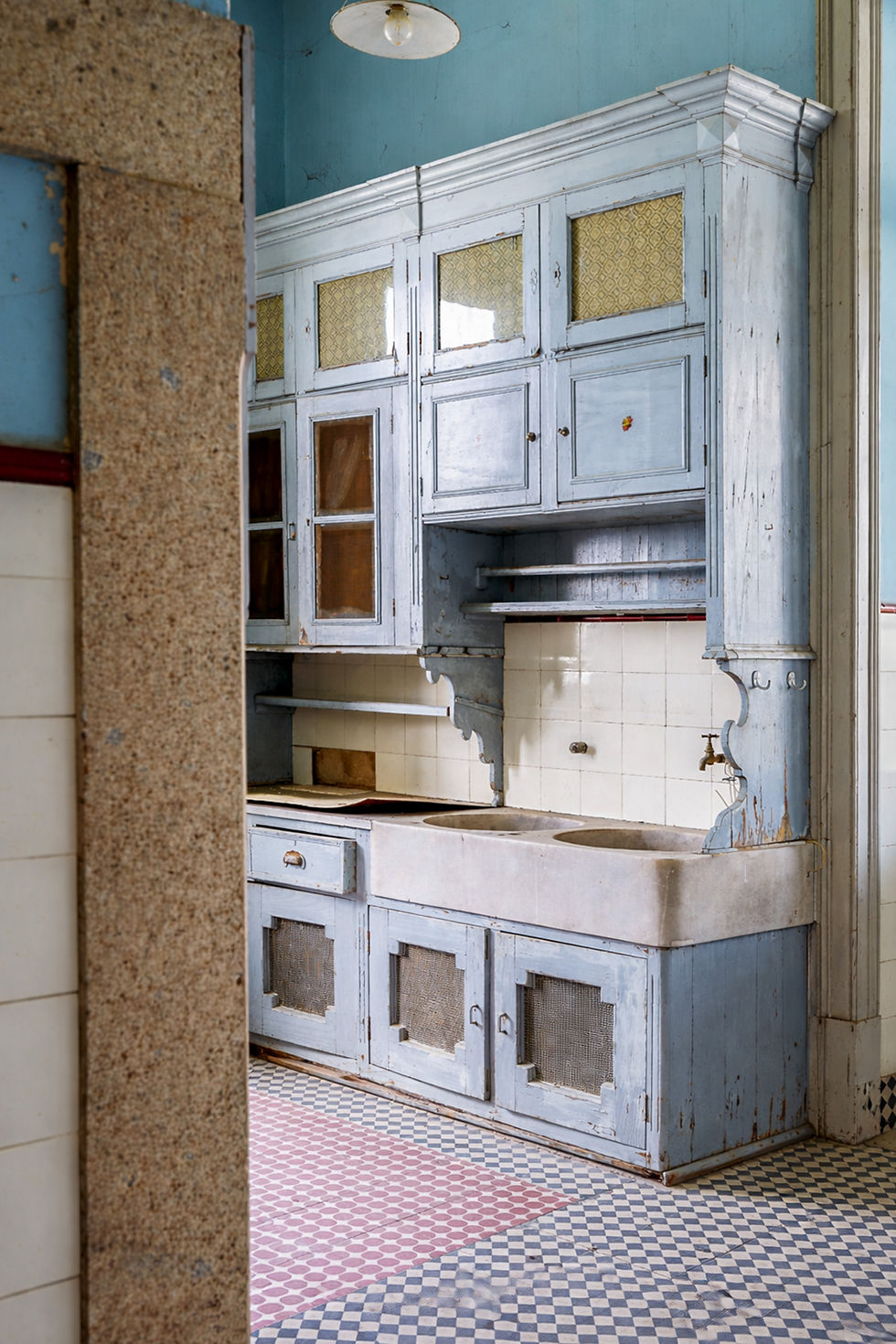
The main rooms have ceilings of decorated stucco, marble fireplaces, wooden floors and tall doors. Some walls keep their floral wallpaper, and the kitchen keeps its painted cupboards and stone sink.
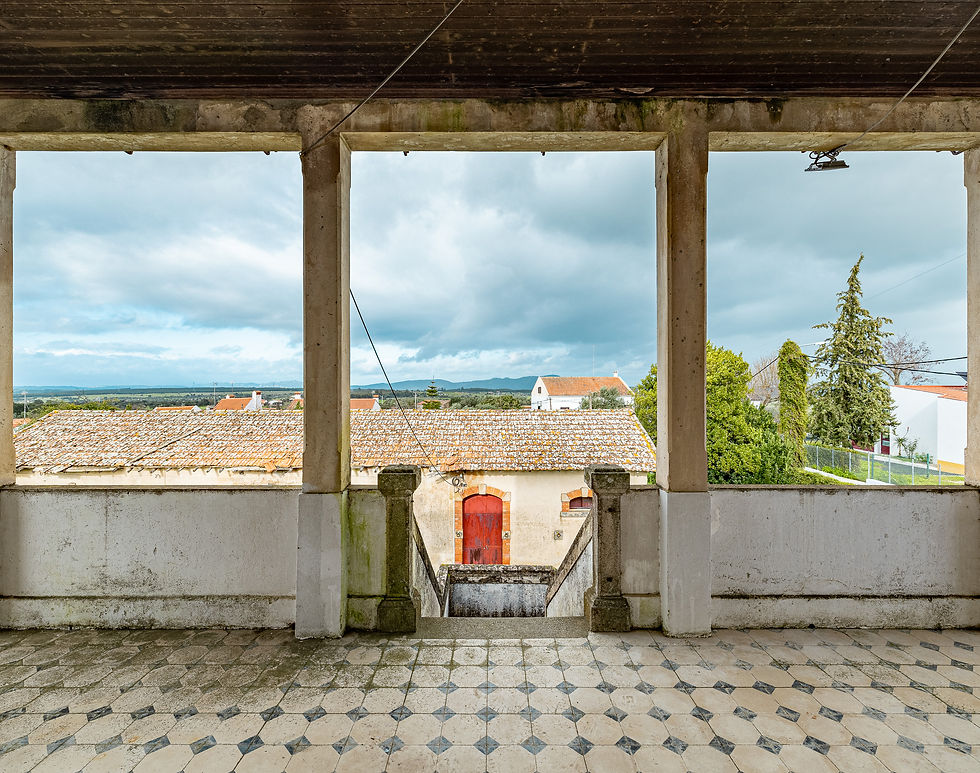
A covered veranda looks out over the rooftops and the plain. In all there are 464 m² over two floors, 24 rooms including ten bedrooms, a 190 m² annex, a 62 m² garage and a garden, on almost 8,000 m² of land: room for a large family, or for a small hotel of character.
The house is for sale through Wiseguys Properties: see the manor house in Nisa. For another Alentejo house with a story, read about the Mellos Josés Palace in Elvas.
Frequently asked questions
Where is Nisa?
In the Alto Alentejo, in the district of Portalegre, Portugal, close to the Tagus and the Spanish border.
What is the alinhavado of Nisa?
An openwork embroidery on linen or cotton: threads are drawn from the fabric and the pattern is built in the spaces, outlined in a corded stitch. It is also called desfiado or ramo de pano.
Who are the Grupo de Alinhavados de Nisa?
A group of local embroiderers, formed more than three decades ago by friends who had followed a training course. Their seat is at number 4 Rua Dr. Manuel Arriaga, in Nisa.
What is Valquíria Enxoval?
A 2009 sculpture by Joana Vasconcelos, made with the artisans of Nisa, shown at Versailles in 2012 and on permanent display at the Cine-Teatro de Nisa since 2016.
Is the house for sale?
Yes, through Wiseguys Properties.
Further reading: Farmhouse for Sale in Portugal: Buying a Monte in the Alentejo.
Sources: Câmara Municipal de Nisa (Rendas e Bordados; Valquíria Enxoval); Tapa ao Sal, "Alinhavados de Nisa" (2016); Universidade da Beira Interior, study on Nisa embroidery; Joana Vasconcelos, Valkyrie Trousseau (2009); Visit Portugal, Nisa; Wikipedia, Nisa. House photographs: Wiseguys Properties.

Comments