
What Greater Happiness? The Farrobo Heirs' Quinta in Águeda
The man who gave Lisbon its parties. The house that asked for less.
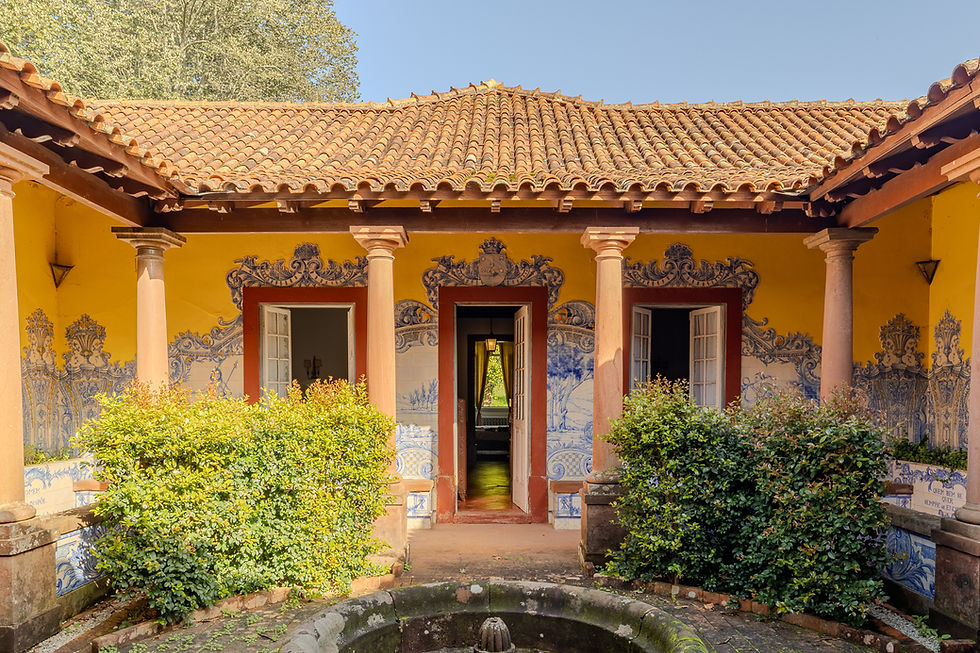
In the courtyard of a quinta above the Águeda valley, a fountain spills into a basin set against a wall of blue-and-white tiles. Above the spout, painted in capitals, is a verse about a little house in a village, a warm fire, a loving wife and a child who calls. It ends with a question: what greater happiness is there in the world? The house belongs to the heirs of the Counts of Farrobo, a family whose name, in Portuguese, became a word for a wild party.
The man who threw the parties
Joaquim Pedro Quintela, first Count of Farrobo (1801–1869), was the richest man in Portugal in his day. Glassworks, mines, insurance, railways and the national tobacco monopoly passed through his hands. At his Quinta das Laranjeiras, on the edge of Lisbon, where the city zoo stands today, stood his Teatro Tália, a favourite salon of Queen Maria II, where the evenings ran late. He was a patron of musicians and painters and served as Inspector-General of Theatres.
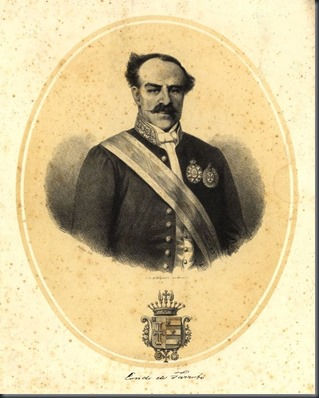
It did not last. He lost the tobacco contract, fought a lawsuit for decades, and in 1862 his theatre burned down and was never rebuilt. He died in 1869 with most of his fortune gone. What remained was a reputation, and perhaps a word: farrobodó, Portuguese for a riotous party, is said to come from his name.
A fortune spent on spectacle.
A quinta in Águeda
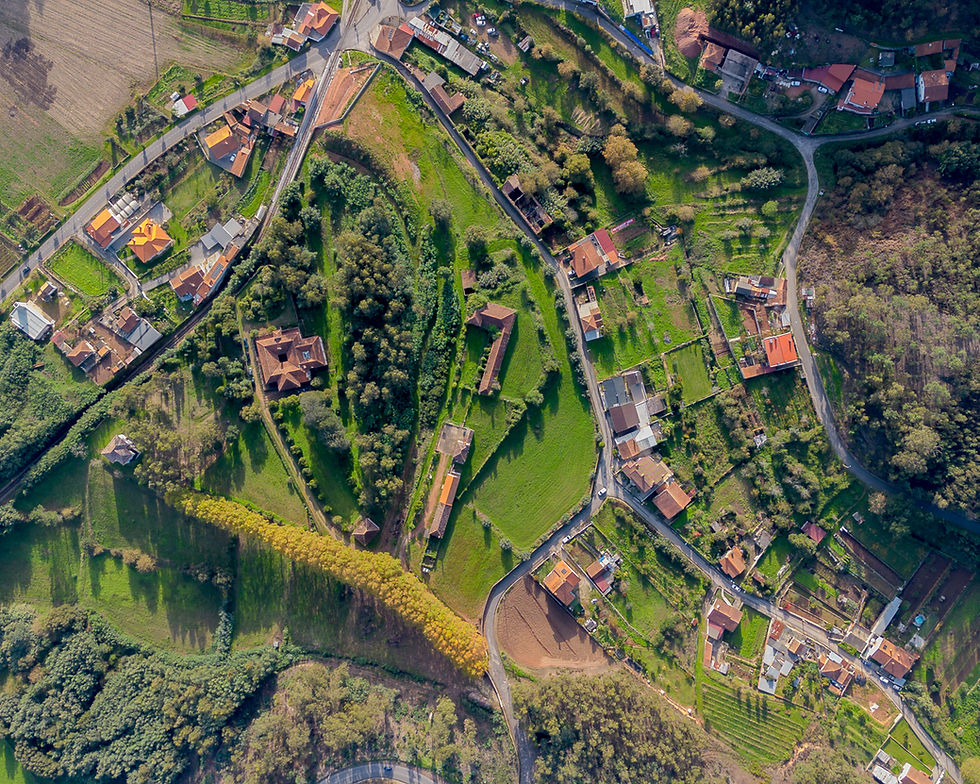
The title passed down the generations, and in the twentieth century the family put down roots far from the Laranjeiras, in the hamlet of Casainho de Cima, in the parish of Recardães, between Aveiro and Coimbra. The Counts of Farrobo have a family tomb in the Recardães cemetery, and the gateway of the quinta carries a coat of arms beneath a count's coronet.

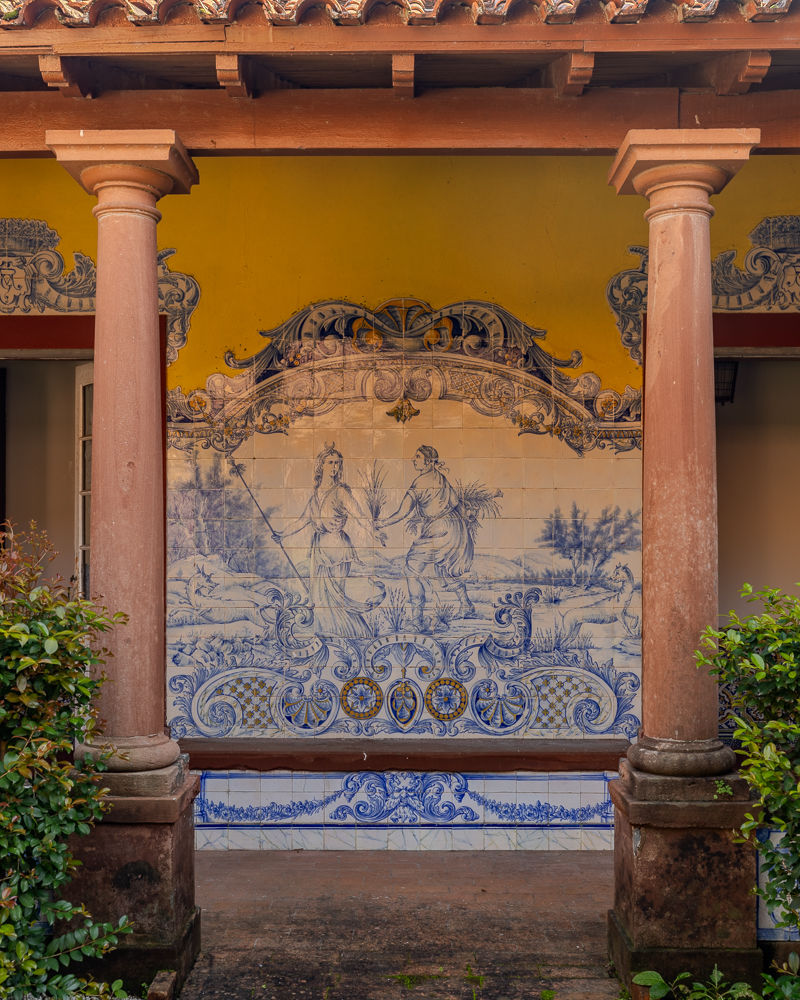
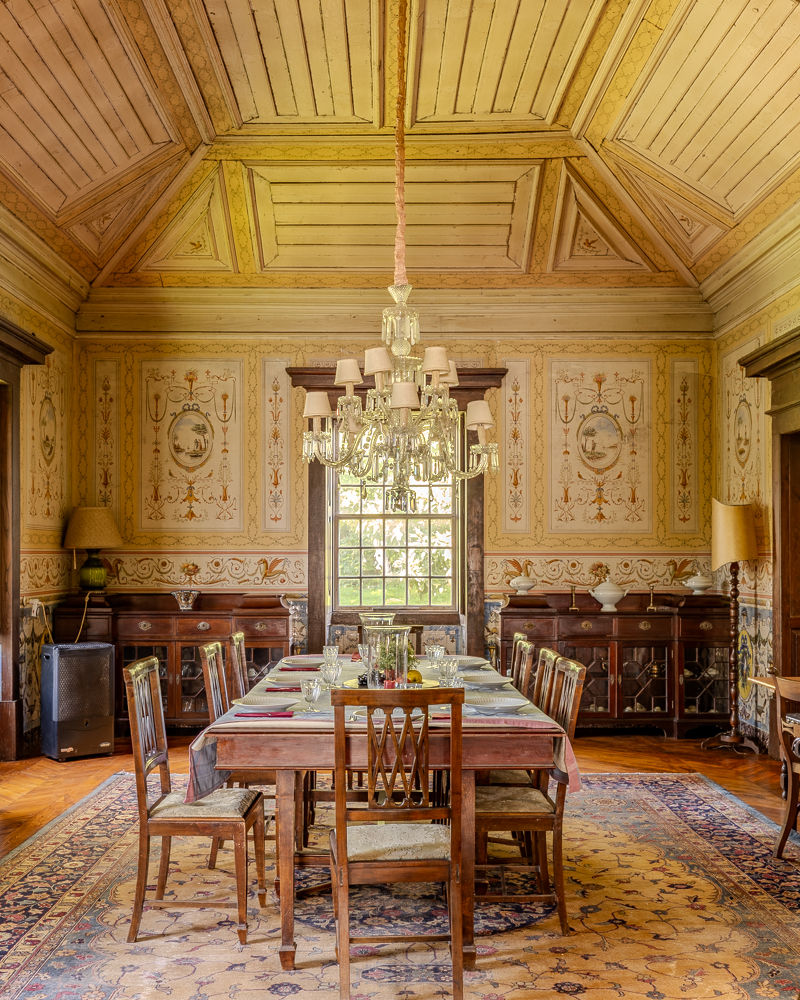
The house itself speaks the language of the early twentieth century, the Portuguese house that architects such as Raul Lino had made fashionable: a columned porch, a scalloped gable, deep eaves of tile, coffered timber ceilings. Around a courtyard, a covered gallery is lined with large tile panels in the eighteenth-century manner, garden scenes framed in scrolls and shells.
A verse in tile
At the centre of it all is the fountain, and its verse. It is unsigned, and written in the voice of a man who wants nothing grand:
UMA CASITA NA ALDEIA
AGASALHADA E BEM CHEIA
FOGO VIVO, AMOR FECUNDO
UMA MULHER QUE NOS AME
UM FILHINHO QUE NOS CHAME
QUE MAIOR DITA NO MUNDO?
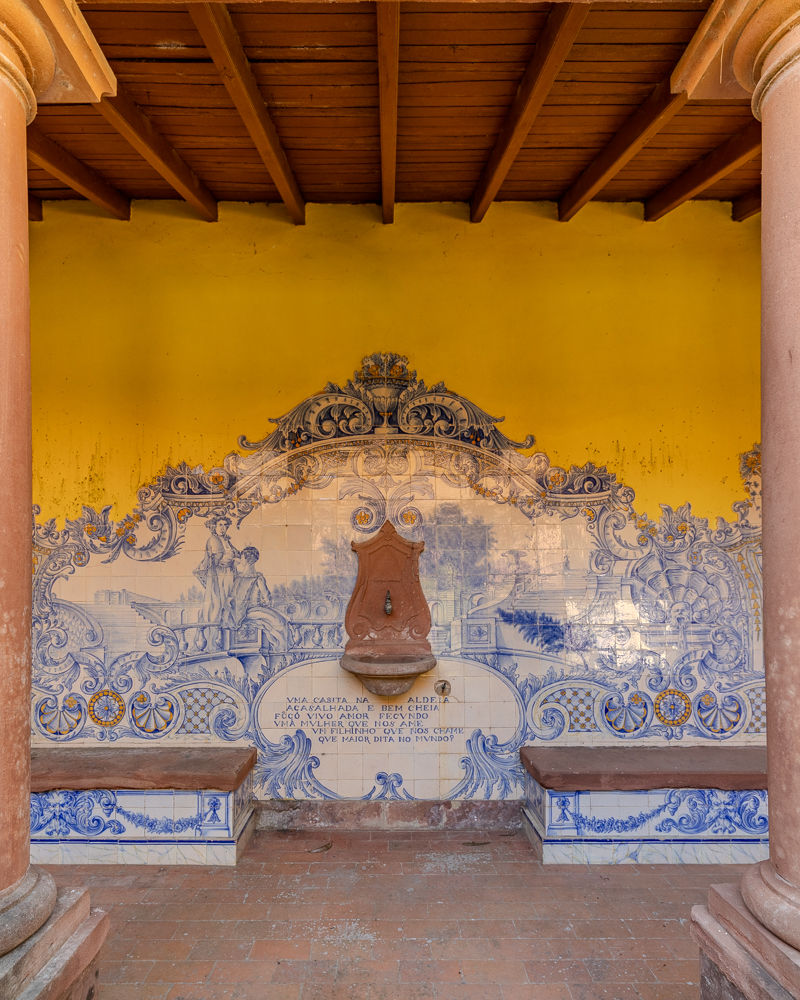
A little house in a village, a fire, a family: the heirs of the great host chose a quieter happiness.
Read beside the story of the first count, the verse sounds like an answer. The theatre, the tobacco, the parties had come and gone. The family that inherited the name built, or kept, a house where the ideal was written on the wall in tile: warmth, love, a child's voice. For more Portuguese tile with a story, read Janelas Verdes, 1905.

The estate today
The quinta covers some 13 hectares above the Águeda river valley: pine woods, gardens and open land, a main house with nine bedrooms, frescoed and coffered ceilings and fireplaces, a second house, a farmhouse for the caseiros, a wine cellar and outbuildings waiting to be restored. Aveiro and Coimbra are close, and Porto airport is around an hour away.
The quinta is for sale through Wiseguys Properties: see the estate in Águeda.
Frequently asked questions
Who was the Count of Farrobo?
Joaquim Pedro Quintela (1801–1869), first Count of Farrobo, a Lisbon financier and patron of the arts, owner of the Quinta das Laranjeiras and its Teatro Tália, whose fortune was largely lost before his death.
Where is the Quinta do Casainho?
In Casainho de Cima, parish of Recardães, municipality of Águeda, between Aveiro and Coimbra, in central Portugal.
What does the tiled verse say?
It praises a little house in a village, a warm fire, a loving wife and a child who calls, and asks: what greater happiness is there in the world?
Where does the word 'farrobodó' come from?
It is said to derive from the Count of Farrobo, famous for his lavish parties at the Quinta das Laranjeiras in Lisbon.
Is the quinta for sale?
Yes, through Wiseguys Properties.
Further reading: Portuguese Tiles: A Guide to the Azulejo, from Sintra to the Metro, and Renovating a House in Portugal: Old Walls, New Rules.
Sources: Geneall, Condes do Farrobo; Joaquim Pedro Quintela, 1st Count of Farrobo (Wikipedia); Solares e Brasões, "Jazigo dos condes de Farrôbo em Recardães" (2014) and "Casa em Casainho de Cima, Águeda" (2018); Câmara Municipal de Águeda, Recardães. Photography: Wiseguys Properties; portrait of the Count of Farrobo: public domain.

Comments