
Portuguese Tiles: A Guide to the Azulejo, from Sintra to the Metro
In Portugal, a wall is rarely silent.
For five centuries the Portuguese have dressed their walls in glazed clay: church naves and kitchen dados, garden benches, railway stations, the façades of whole streets. Portuguese tiles, the azulejos, are the country's most recognisable decorative art, and for anyone who owns or buys an old house they are also a practical matter. This guide follows the azulejo from its Moorish beginnings to the Lisbon Metro, then explains how to read the tiles in a house and how to care for them. The word itself has nothing to do with blue: it comes from the Arabic for a small polished stone. The best introduction remains the National Azulejo Museum, in Lisbon.

From Seville to Sintra
The first tiles on Portuguese walls came from Spain. From the second half of the fifteenth century, floor tiles were imported from Manises, near Valencia, and from the early sixteenth century workshops in Seville and Toledo supplied wall tiles made with two Hispano-Moresque techniques. In corda-seca, thin lines keep the coloured glazes apart; in aresta, the pattern is moulded in raised ridges that do the same work. A third method, alicatado, assembles shapes cut from glazed pieces, like a mosaic.
The National Palace of Sintra still shows the whole range: corda-seca in the central courtyard, aresta and alicatado in the Palatine Chapel, and a rare mudéjar ceramic floor of the fifteenth century. It is the place to see where the Portuguese story begins.
Painting on glaze
In the sixteenth century a new technique changed everything. Majolica, of Italian origin, allowed painters to work directly on a white tin glaze, as on a canvas. In 1558 the Duke of Bragança, Teodósio I, ordered tiles from Antwerp for his palace at Vila Viçosa. In the same years Flemish potters were settling in Lisbon, and Portuguese production began. The Quinta da Bacalhoa, in Azeitão, received tiles from 1565, and around 1580 came the altarpiece of Nossa Senhora da Vida, attributed by the museum to João de Góis and now classified as a National Treasure.
Carpets of tiles
The seventeenth century made the azulejo a matter of repetition. The first answer was the enxaquetado, plain tiles of alternating colours laid like a chequerboard, handsome but slow and costly. It gave way to the pattern tile, the azulejo de padrão: a module repeated across the wall, from a square of two by two tiles up to sixteen by sixteen. Spread over naves and refectories, these patterns became what the Portuguese call tapetes, carpets of tiles. Borders (cercaduras), bands (barras) and friezes framed them, and the same words still describe a panel today.
Blue and white was a fashion before it became a tradition.
Blue and white: the age of the masters
Towards 1700, under the influence of Dutch tiles and Chinese porcelain, Portuguese painters turned to blue on white. A Spanish painter settled in Portugal, Gabriel del Barco, was among the first to sign his panels. Then came what historians call the Ciclo dos Mestres, the cycle of the masters: António de Oliveira Bernardes, his son Policarpo de Oliveira Bernardes, Manuel dos Santos and a painter known only by the initials P.M.P. Their large figurative panels turned the azulejo into painting on an architectural scale.
Under King João V, production grew as never before, helped by large commissions from Brazil. Lisbon's own portrait in tiles, the Great View of Lisbon of about 1700, hangs in the National Azulejo Museum. For a Lisbon quinta of that century and its tiles, read our story of the Quinta de São Sebastião in Lumiar.
After the earthquake
The earthquake of 1755 called for speed. To rebuild Lisbon, builders returned to pattern tiles, cheaper and quicker to lay, in a manner now called Pombaline, after the Marquis of Pombal. In 1767 a royal factory, the Real Fábrica de Louça at Rato, was founded to increase Portuguese ceramic production. Many patterns of the late eighteenth century are attributed to it, some only tentatively.
The tiled street
In the nineteenth century the azulejo moved outdoors. Pattern tiles, by then the cheapest durable finish for a wall, covered thousands of façades. New factories met the demand, among them Viúva Lamego, Sacavém, Constância and Roseira in the Lisbon area. Semi-industrial methods helped: with the estampilha, a stencil through which colour was applied, a pattern could be produced faster and more evenly than by hand. On the Largo do Intendente, the Viúva Lamego building still wears its own advertisement, figurative tiles by the factory's artistic director, known as Ferreira das Tabuletas.
Where the fashion for tiled façades came from is still discussed. José Maria dos Santos Simões, the great historian of the azulejo, linked the fully tiled houses of Brazil to the climate, since glazed tile sheds rain and reflects heat; later research has found that explanation too simple. What is clear is that the early tiled façades of Brazil were dressed in tiles made in Portugal.
Art Nouveau, Colaço and the Metro
Around 1900 the tile became an art again. In Caldas da Rainha, the Fábrica de Faianças founded in 1884 produced Rafael Bordalo Pinheiro's tiles, with revivalist, naturalistic and Art Nouveau patterns. In Lisbon, in 1905, the owner of the Constância factory put up a building on the Rua das Janelas Verdes dressed in relief Art Nouveau tiles by Viriato Silva, a façade that works as a catalogue: we told its story in Janelas Verdes 1905. In Porto, between 1905 and 1916, Jorge Colaço lined the hall of São Bento station with some twenty thousand tiles made at Sacavém.

The twentieth century did not abandon the azulejo; it made it public. From 1957 to the early 1970s, Maria Keil designed tile panels for the first stations of the Lisbon Metro, and Querubim Lapa, Júlio Pomar and Vieira da Silva, among others, followed her underground. Above ground, on the Avenida Infante Santo, panels by Maria Keil, Carlos Botelho, Júlio Pomar, Alice Jorge and Sá Nogueira accompany the modern housing blocks of the 1950s, a story we tell in our guide to Lisbon's apartment buildings of 1930 to 1960.
Reading the tiles in a house
A few questions give a first date. Is the pattern raised, with colours held apart by ridges or lines? It may be Hispano-Moresque, or a later copy of it. Is it painted freehand on a white glaze? That is majolica, from the late sixteenth century onwards, and large panels in blue and white suggest the eighteenth. Is a small module repeated across a façade, with crisp, slightly hard edges of colour? A stencilled pattern of the nineteenth century is likely. Relief tiles with plants and sinuous lines point to Art Nouveau; smooth, sprayed gradations of colour to the aerographed tiles that Sacavém made in the Art Deco years.
None of these clues is proof. Tiles were copied, reused and replaced, sometimes within the same wall. A conservator-restorer, or the specialists of the National Azulejo Museum, will date a panel with far more confidence.
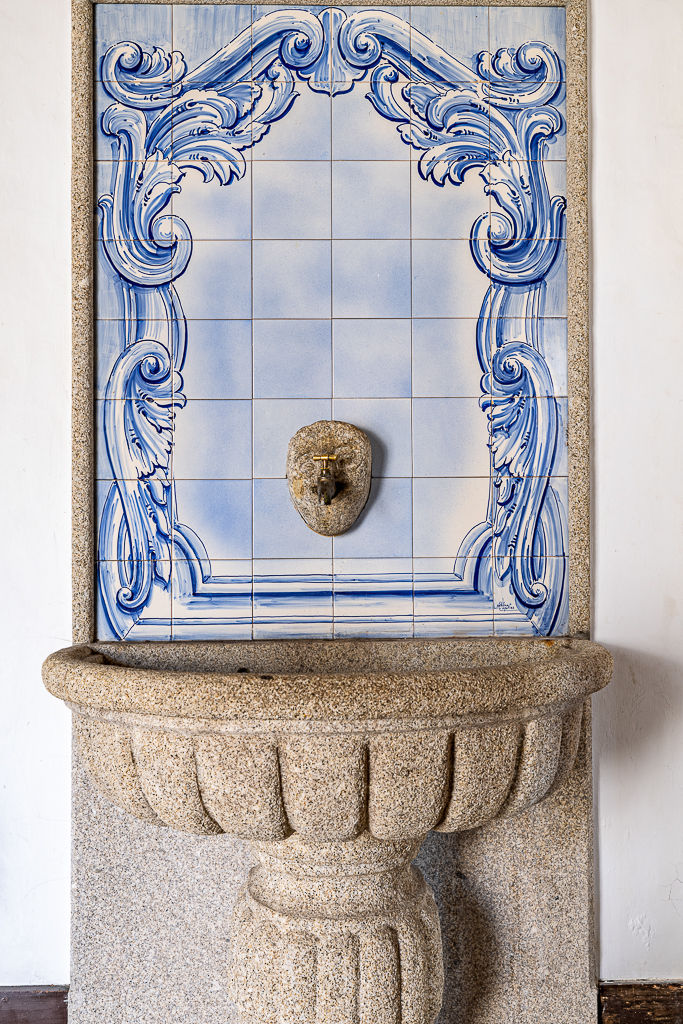
Caring for azulejos, and the law
The first rule is simple: leave them on the wall. Since Lei 79/2017, of 18 August, any work that removes tiles from a façade needs a municipal licence, whether the façade faces the street or a back garden, and the council may refuse it unless the tiles are judged to have little or no heritage value. Interior works that would otherwise be exempt lose that exemption if they remove façade tiles. Lisbon already protected tiled façades in its municipal rules before the national law. The text is published in the Diário da República.
The law grew out of SOS Azulejo, a project of the Polícia Judiciária's museum that has worked since 2007 against the theft and loss of tiles, and which won the Europa Nostra Grand Prix in 2013. For an owner the lessons are practical: photograph and record the tiles, keep any that fall, and buy antique tiles only with a known provenance.
Repairs are work for a conservator-restorer. A study of tiled façades in Aveiro lists the usual enemies, rising damp, salt air, lack of maintenance and past repairs in incompatible materials, and the usual mistake: cement mortar, harder than the old wall and impossible to undo. Lime mortars, original tiles set back in place and replicas that can be told apart from the originals are the sound approach. If the building is classified, as the Janelas Verdes building is, works also follow heritage rules: see our guide to buying a classified property.
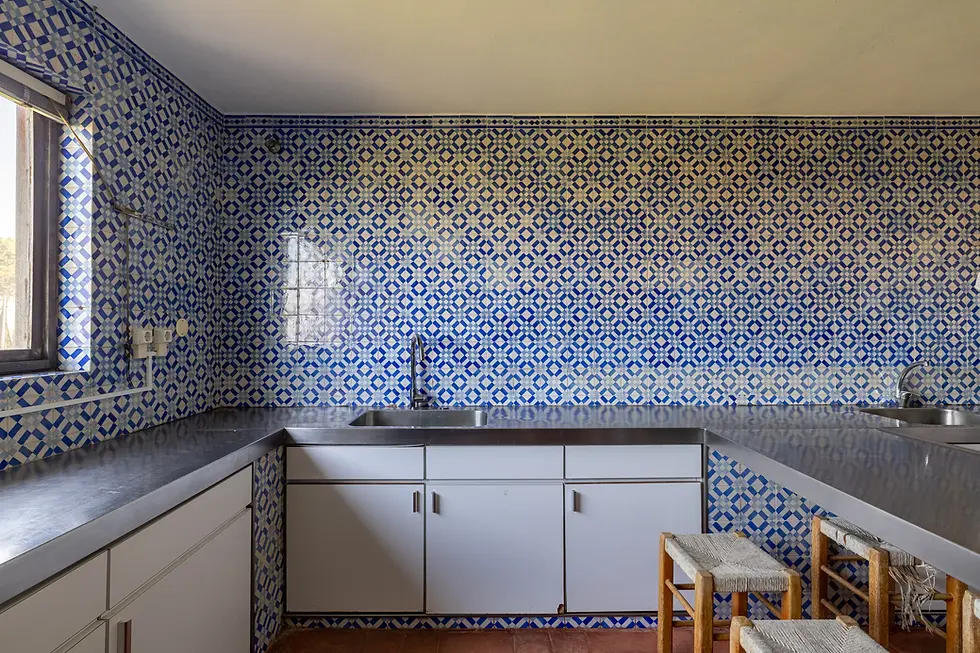
Old tiles add to a house when they are understood and documented. The apartment in the Janelas Verdes 1905 building, in Lapa, is for sale through Wiseguys Properties, and the blue and white panels of a quinta near Águeda feature in our Journal. If you own a house with azulejos and are thinking of selling, WGP Advisors would be glad to talk.

Frequently asked questions
What are Portuguese tiles called?
Azulejos. The word comes from the Arabic for a small polished stone, not from azul, the Portuguese word for blue.
Why are so many Portuguese tiles blue and white?
Blue and white became the dominant fashion around 1700, under the influence of Dutch tiles and Chinese porcelain, and defined the great panels of the eighteenth century. Earlier and later tiles are often polychrome.
Can I remove the tiles from my building's façade?
Not without a municipal licence. Lei 79/2017 requires one for any removal of façade tiles and allows the council to refuse it unless the tiles have little or no heritage value.
How can I tell how old my tiles are?
Technique, colour and pattern give a first date, but tiles were often copied and reused. A conservator-restorer or the National Azulejo Museum can give a reliable reading.
Where can I see Portuguese tiles in Lisbon?
Start at the National Azulejo Museum, in the former convent of Madre de Deus, founded in 1509. Then walk the tiled façades of the older neighbourhoods, and take the Metro.
Is there a national day of the azulejo?
Yes. Portugal has celebrated the Dia Nacional do Azulejo on 6 May since a resolution of the Assembleia da República in 2017.
This article is general information and does not replace legal advice. Sources: Museu Nacional do Azulejo; Parques de Sintra, Palácio Nacional de Sintra; Turismo de Lisboa, Rota do Azulejo; Património Cultural, Tesauro SIPA; Lei 79/2017, de 18 de agosto; Resolução da Assembleia da República 144/2017; Europa Nostra, SOS Azulejo (2013); Museu Bordalo Pinheiro; S. Moutinho and A. Velosa, Conservar Património 41 (2022); J. M. dos Santos Simões and J. Meco, histories of the Portuguese azulejo. Photographs: Wiseguys Properties.


Comments