
Lisbon Neighbourhoods: Where to Live, Read Through Architecture
In Lisbon, the building tells you the neighbourhood.
Lisbon is a city of layers: a medieval hill, an eighteenth-century grid rebuilt after an earthquake, nineteenth-century avenues, planned districts of the 1940s and a riverside born of a world exhibition. Each layer made its own kind of house. Reading Lisbon neighbourhoods through their architecture is the surest way to understand how they live, and which of them might suit you. What follows is a portrait of eleven, from west to east and from the river to the north, with the houses that Wiseguys Properties knows in several of them.
Lapa, Madragoa, Estrela and Campo de Ourique
Lapa climbs from the river towards Estrela in quiet streets of noble houses and palaces, many with gardens behind high walls. Since 2012 it has belonged to the parish of Estrela. On the Rua das Janelas Verdes stands the Museu Nacional de Arte Antiga, founded in 1884 in a seventeenth-century palace, the Palácio Alvor, which Lisbon still calls the museum of the Janelas Verdes. A few doors away, a building of 1905 wears an Art Nouveau facade of relief tiles: we told its story in Janelas Verdes 1905. Below Lapa, Madragoa is a denser web of narrow streets and small houses running down towards the river.
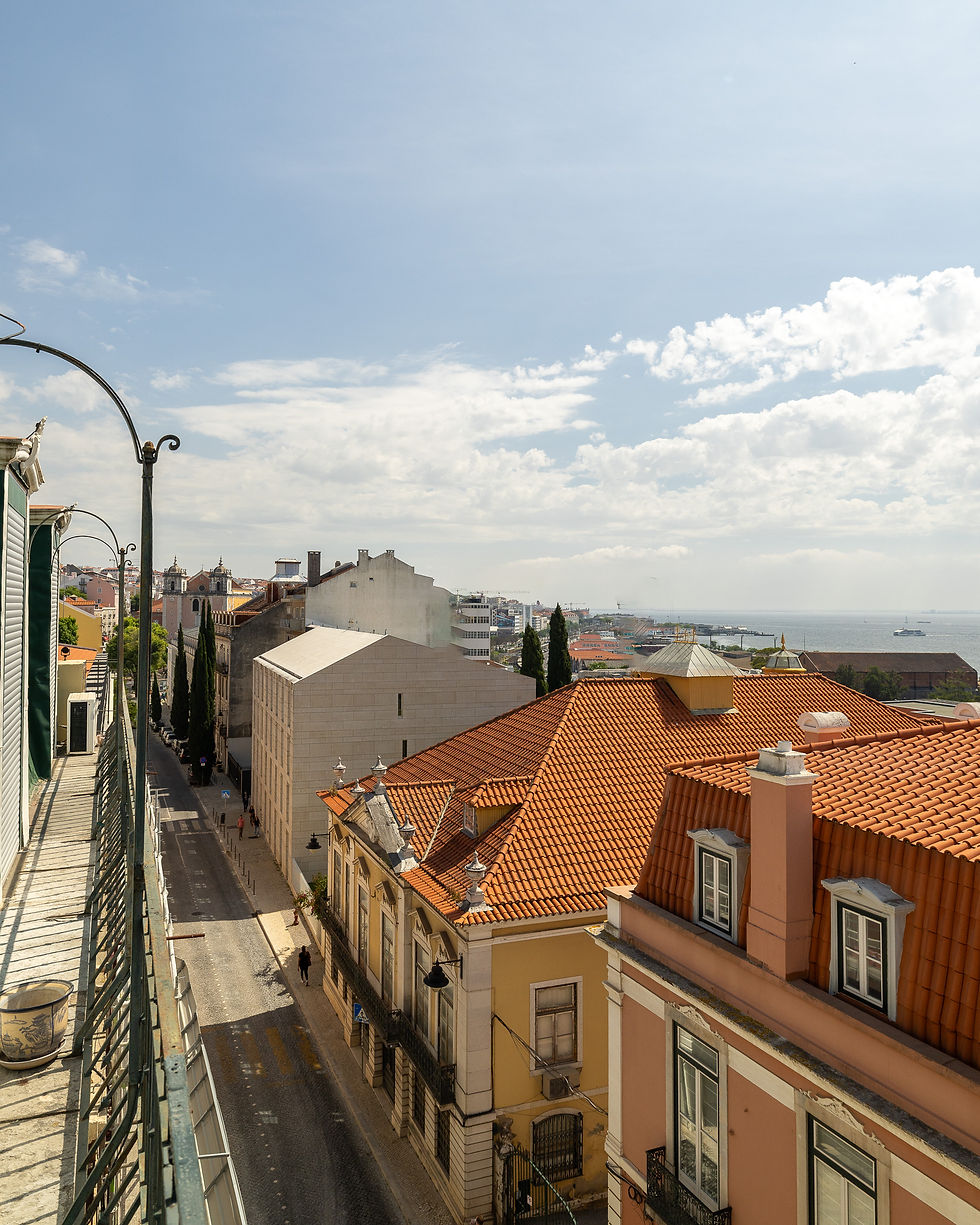
Estrela takes its name from the basilica that Queen Maria I built in fulfilment of a vow, begun in 1779 and consecrated in 1789, dedicated to the Sacred Heart of Jesus. Beyond it, Campo de Ourique was laid out as part of the nineteenth-century expansion plan of the engineer Ressano Garcia, and its regular streets still give it the feel of a self-contained town, with its own market, open since 1934.
Baixa, Chiado and Príncipe Real
The Baixa is the city rebuilt after the earthquake of 1 November 1755: a plan by Manuel da Maia, carried out by the military engineers Eugénio dos Santos and Carlos Mardel, approved in 1758, with a regular grid of blocks and buildings braced by the gaiola, an internal timber cage designed to resist earthquakes. Pombaline Lisbon has been on UNESCO's Tentative List since 2017. Uphill, the Chiado burned on 25 August 1988; its reconstruction was entrusted to Álvaro Siza, and the last piece, the Terraços do Carmo, opened in 2015.
Further up, Príncipe Real is a district of nineteenth-century town houses around a garden, which sits on top of the Reservatório da Patriarcal, a water reservoir completed in 1864. It is central and residential at once, which is rarer in Lisbon than it sounds.
Alfama and Graça
Alfama keeps the street plan of the medieval city. Its houses were largely rebuilt after 1755, but on the old lots and along the old lanes, which is why the neighbourhood still feels like a single organism climbing to the castle. Next to it, Graça adds some of the city's great viewpoints, the miradouros, and something particular to Lisbon: the vilas operárias, courtyard estates built for rent at the turn of the twentieth century. Vila Berta, built between 1908 and 1911, is now a classified ensemble of public interest.
Each layer of Lisbon made its own kind of house.
Avenidas Novas and Arroios
North of the Marquês de Pombal, Ressano Garcia drew the Avenidas Novas around the Avenida das Picoas, renamed Avenida da República after 1910. The district filled with apartment buildings for rent, the prédios de rendimento, and with town houses, several of them distinguished by the Prémio Valmor, the city's architecture prize, awarded since 1902. The Casa Viscondes de Valmor, by Ventura Terra, won it in 1906 and still stands on the Avenida da República. Our article on a flat by Francisco Tojal near Campo Pequeno shows what these buildings can become, and our guide to the Estado Novo apartment buildings follows the story into the 1930s and 1940s. The Quiet Blue, a top-floor flat in a building of 1935, is available to rent.

To the east, Arroios is a parish created in 2012 from Anjos, Pena and São Jorge de Arroios, around the Avenida Almirante Reis. It is one of the densest and most mixed parts of the city, with apartment buildings from the late nineteenth century onwards. The Diplomat, a two-bedroom apartment, is for sale there.

Alvalade and Restelo: the planned city
Alvalade is the most complete planned district in Lisbon. The architect João Guilherme Faria da Costa drew it between 1940 and 1945 for some 45,000 people on 230 hectares, in eight cells, each organised around a school, mixing controlled and free rents, houses and apartment buildings. Building began in 1947. The result is a neighbourhood of trees, schools and corner shops that many families choose for exactly those reasons. Villa Bontempo, a seven-bedroom house, is for sale there.
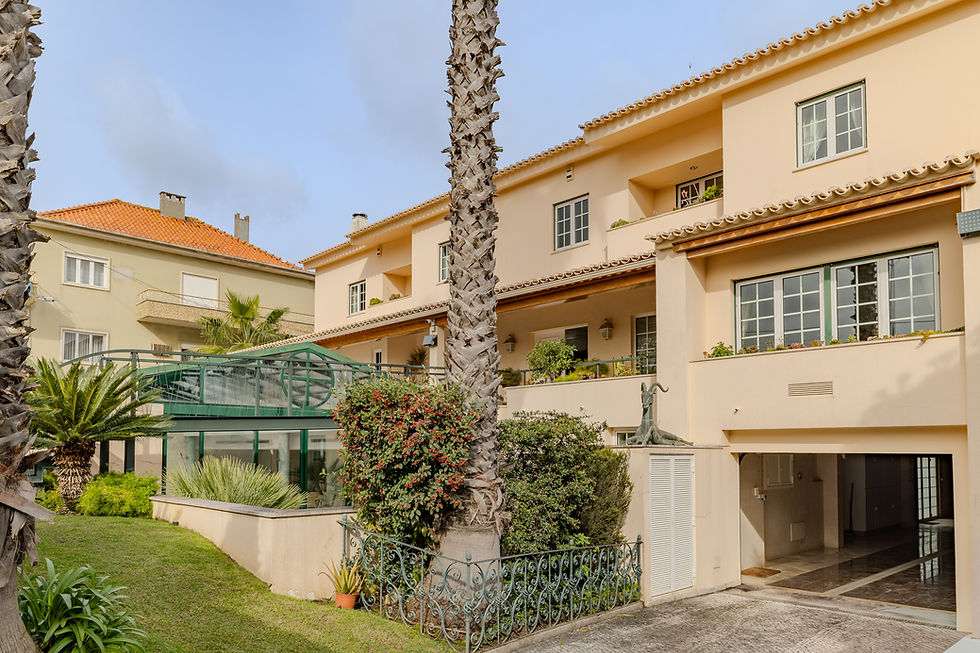
Restelo, on the slope above Belém, began with Faria da Costa's plan for the Encosta da Ajuda in 1938. In the years after 1940, the first generation of Portuguese modernist architects filled it with large detached houses, and later plans added apartment blocks and modernist villas north of the Avenida do Restelo. It remains the Lisbon of gardens and houses: Vista Royal, a six-bedroom villa, is for sale there.

Parque das Nações and Lumiar
Parque das Nações was built for Expo 98 on the eastern riverside, and it kept the exhibition's architecture: the Oriente station by Santiago Calatrava, the Portugal Pavilion by Álvaro Siza, the Pavilhão do Conhecimento by Carrilho da Graça. It is the newest of Lisbon's neighbourhoods, with modern apartment buildings, a long riverside promenade and fast access to the airport.
In the north, Lumiar keeps the memory of the eighteenth-century quintas where Lisbon families spent the summer. Around the Paço do Lumiar, old estate houses, chapels and tiled gardens survive between newer buildings; we described them in our article on the Paço do Lumiar. One of them, the palace of the Quinta de São Sebastião, is for sale as Garden of Eden.
Before you choose
Visit at different hours: some of the best areas to live in Lisbon change completely between a weekday morning and a Saturday night. Walk the slopes, because Lisbon is a city of hills and stairs. Look at the building as much as at the flat: its age, its structure, the state of the common parts, the condominium. A building from before 1951 may have no use licence, and that can be normal (see our note on the licence). For the purchase itself, read buying property in Portugal, step by step and what buying a home really costs; if you are moving from abroad, see buying a home as a foreigner. To find a house in one of these neighbourhoods, or to sell one, contact us.
Frequently asked questions
What are the best areas to live in Lisbon?
It depends on how you live. Lapa, Estrela and Príncipe Real suit those who want period houses near the centre; Campo de Ourique and Alvalade suit families; Restelo offers houses with gardens; Parque das Nações offers newer buildings by the river.
Which Lisbon neighbourhoods are best for families?
Campo de Ourique and Alvalade are often chosen by families: both were planned with markets, schools and regular streets, and Alvalade was organised from the start around its schools.
Where can I find houses with gardens in Lisbon?
Mostly in Restelo and Lapa, and in the old quintas of Lumiar. In the historic centre, gardens are rare and usually hidden behind walls.
Is Alfama a good place to live?
It is one of the most atmospheric parts of the city, with a medieval street plan, steep lanes and much tourism. Buildings are old and often small, so check their condition carefully.
Can foreigners buy property in any Lisbon neighbourhood?
Yes. Portugal does not restrict property purchases by foreigners. A Portuguese tax number (NIF) is needed.
Sources: Câmara Municipal de Lisboa, Hemeroteca Digital (Ressano Garcia; Bairro de Alvalade); UNESCO, Tentative List, Pombaline Lisbon (2017); ISCTE-IUL, study on the Restelo; Universidade de Évora, study of the buildings of Alfama; Lusa, Vila Berta (2021); Visit Lisboa, Reservatório da Patriarcal; Museu Nacional de Arte Antiga. Photographs: Wiseguys Properties.


Comments