
Home Staging an Old House: Preparing a Period Home for Sale
An old house does not need to be dressed. It needs to be read.
Home staging, the craft of preparing a house so that buyers can see it clearly, grew up among new suburban houses and neutral paint. A Portuguese house of 1900, with pine floors, stucco ceilings and a tiled kitchen, asks for something else: not a new costume, but a careful edit. Preparing a period house for sale is mostly a matter of subtraction, honest repair and good paperwork. This guide sets out how we approach it, room by room and file by file.
Light first
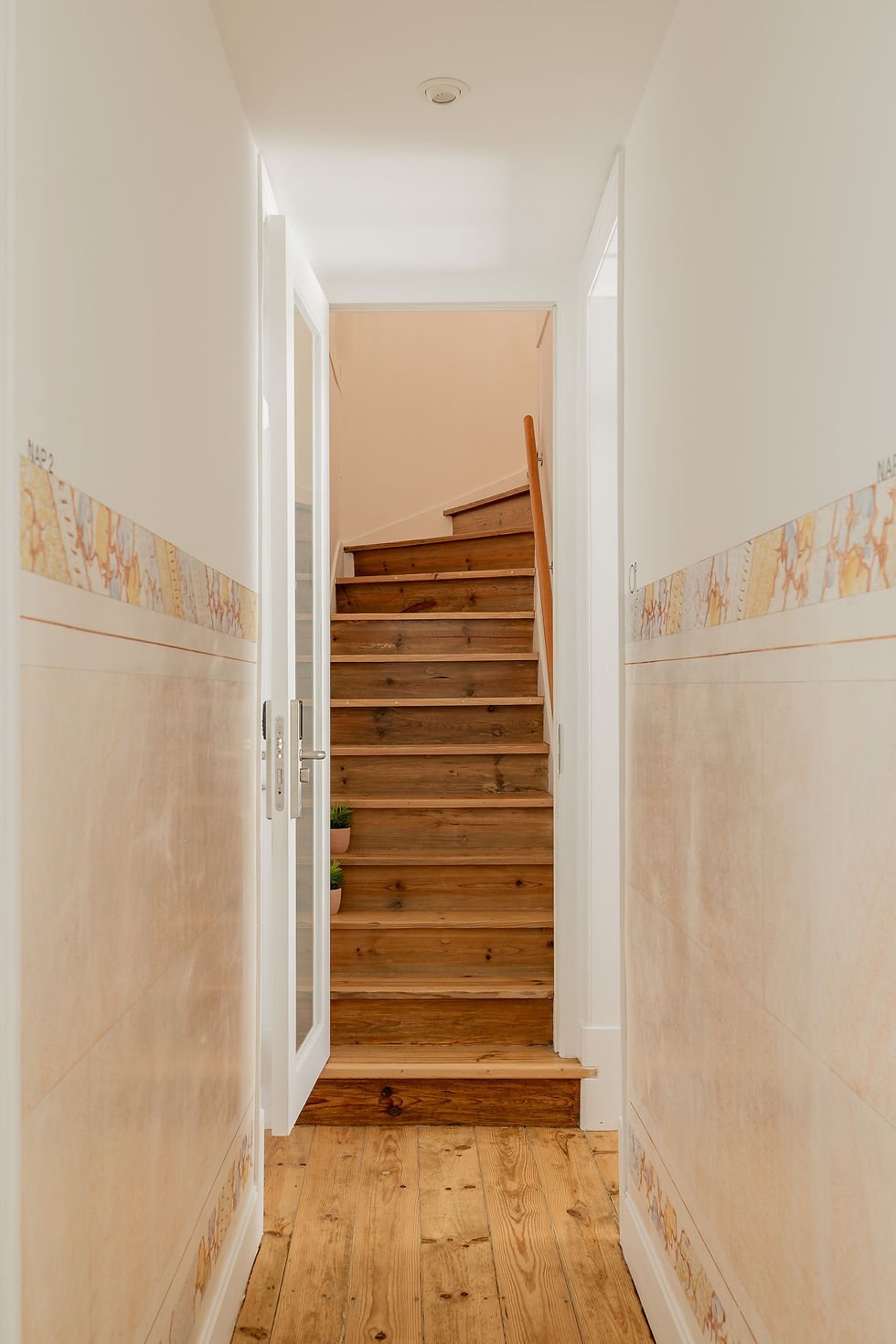
Buyers walk through rooms but remember light. Before anything else, open the shutters and the interior doors, take down heavy curtains that hide the window frames, clean the glass and use bulbs of one warm colour throughout. In older Portuguese houses light often arrives through deep window reveals and tall doors set in enfilade. Keeping those doors open lets a visitor read the depth of the house in a single look.
If a room is dark by nature, a kitchen below street level or a bedroom facing north, do not fight it with spotlights. Show it at the hour when it is at its best, and say so in the photographs.
Subtraction, not decoration
Most houses that come to the market are full: of furniture, of photographs, of decades of family life. Staging begins by taking half of it away. Clear the surfaces, empty a third of each wardrobe, remove pieces that block circulation, and give every room one clear use. A buyer should not have to guess whether a small room is a study, a dressing room or a store. Walls ask for the same restraint: take down most of the pictures, leave one or two where they help a room, and fill the nail holes. Rugs that hide a good floor go into storage.
Keep what belongs to the house. A good table, a period mirror, a bookcase built into the wall tell the visitor how the rooms were meant to be lived in. Remove what belongs only to the family. The Great Green House in Portalegre, a restored manor, shows how furniture can be placed with restraint.
Have nothing in your houses that you do not know to be useful, or believe to be beautiful.
William Morris gave that advice to the Birmingham Society of Arts in 1880, in a lecture called The Beauty of Life. It remains the best brief for staging an old house.

Honest repairs, original materials
Buyers of period houses come for the original materials, and they look at them closely: pine or oak floors, decorative stucco, azulejo panels, timber sash windows, old stone. Treat them accordingly. Have floors cleaned and oiled rather than covered. Fill and repaint cracked stucco rather than hiding it under a false ceiling. Replace a missing tile with a matching old one, or leave the gap and say why, never with a modern imitation. The tiled rooms of the Arte Nova apartment on Rua das Janelas Verdes show what is at stake; our guide to Portuguese azulejos explains the rest.
Then the small things: ease windows that stick, replace broken panes, fix dripping taps and loose sockets. Be honest about the larger ones. Damp, a tired roof or old wiring will be found by any surveyor. A seller who mentions them first, with a quote for the work, keeps control of the negotiation; fresh paint over a damp stain loses a buyer's trust in a minute. Where a full restoration is needed, it is often wiser to sell the house as it is, with a clear brief, than to rush works a new owner would undo. See our guide to restoring an old house.
Repair what is broken. Explain what is old. Hide nothing.

Smell, sound and the garden
Old houses have a smell, and buyers notice it before they notice the ceilings. Air the house for days before visits, not minutes, and deal with the cause of any mustiness, a blocked gutter or a room kept shut, rather than covering it with scent. Turn off the television and let the house be heard: a clock, a courtyard, the street at a distance.
Outside, the garden needs order rather than new planting. Cut the grass, prune what blocks windows and paths, sweep the courtyard, clear the terrace of anything broken. A wall freshly limed costs little and changes a photograph. For a country house, show the land as well: its limits, its wells, its access.

Photographs, a plan, the figures
Most buyers first meet a house on a screen. In the 2025 Profile of Home Staging, a survey of estate agents in the United States published by the National Association of Realtors, 73% of buyers' agents rated photographs as highly important to their clients, ahead of physical staging (57%) and video (48%). In the same survey, 29% of agents said staging had raised the value offered by between 1% and 10%. These are the views of American agents, not Portuguese sales data, but the order of priorities holds: the photograph comes first.
Choose a photographer who works with natural light and an honest lens, photograph each room at its best hour, and add a measured floor plan. A plan explains an old house, its enfilades, its service stairs, its changes of level, as no photograph can. The living room, the main bedroom and the kitchen deserve the most care: they are the rooms buyers ranked highest in that survey.
Papers ready before the first visit
A well-prepared house can still lose its buyer at the notary. Before the first visit, gather the caderneta predial, the certidão permanente from the land registry, the energy certificate, which is required from the moment the house is offered for sale, and the use licence or the certificate that the building predates 1951: see our note on older buildings and the use licence. If the house is part of an estate, the heirs' papers must be in order too: read selling an inherited house. Our guide to selling property in Portugal, step by step lists the rest, and our note on how much your house is worth explains how the price is set.
Wiseguys Properties prepares the houses it sells: editing rooms, commissioning photographs and plans, and gathering the documents before a listing goes live. If you are thinking of selling a period house, tell us about it, or see how we presented Casa Studio in Abrantes.
Frequently asked questions
What is home staging?
Preparing a house for sale so that buyers can see its rooms, light and materials clearly: removing clutter, making small repairs, arranging furniture and producing good photographs.
Does home staging increase the sale price?
There is no Portuguese data. In a 2025 survey of US agents by the National Association of Realtors, 29% said staging had raised the value offered by between 1% and 10%.
Should I renovate an old house before selling it?
Rarely in depth. Repair what is broken and disclose what is old. Major works are usually better left to the buyer, who will have plans of their own.
Should I paint everything white?
Not necessarily. Repaint damaged walls in quiet tones, but keep original finishes, tiles, stucco and timber, which buyers of period houses look for.
Which documents should be ready before visits?
The caderneta predial, the certidão permanente, the energy certificate and the use licence or its exemption, plus the heirs' papers if the house is inherited.
This article is general information and does not replace professional advice. Sources: National Association of Realtors, 2025 Profile of Home Staging (6 May 2025); William Morris, The Beauty of Life, lecture to the Birmingham Society of Arts (1880). Photographs: Wiseguys Properties.

Comments